

Table of Contents
- Quick Comparison: Best Breathable Sheets for Hot Sleepers
- How We Found the Best Breathable Sheets
- Cooling Sheets for Night Sweats: What Actually Works
- Bamboo vs Cotton Sheets for Temperature Regulation
- How to Choose Cooling Bedding Materials: A Practical Guide
- Which of Our Top Picks Should You Choose?
- Conclusion
- Frequently Asked Questions
Last Updated: September 7, 2026
Waking up drenched in sweat disrupts your sleep cycle and leaves you exhausted. Finding the best breathable sheets for hot sleepers comes down to fiber, weave, and moisture management, not just thread count.
Quick Comparison: Best Breathable Sheets for Hot Sleepers
Every hot sleeper needs sheets that pull heat and moisture away from the body. The most effective options combine natural fibers like cotton, linen, or TENCEL™ lyocell with an airflow-promoting weave like percale. Prioritizing breathable sheets made from natural or semi-natural materials is the first step.
Here is how our top cooling options compare at a glance:
| Sheet Set | Material | Best For | Price |
|---|---|---|---|
| TENCEL™ Lyocell & Linen Blend | Lyocell + Linen | Night sweats & moisture-wicking | $99.99 |
| Jersey Sheet - Carmen Collection | Cotton-Polyester Jersey | Softness & year-round use | $49.99 |
| Flannel Jersey Sheet - Cozy Flex | Cotton Flannel Jersey | Lightweight warmth & affordability | $59.99 |
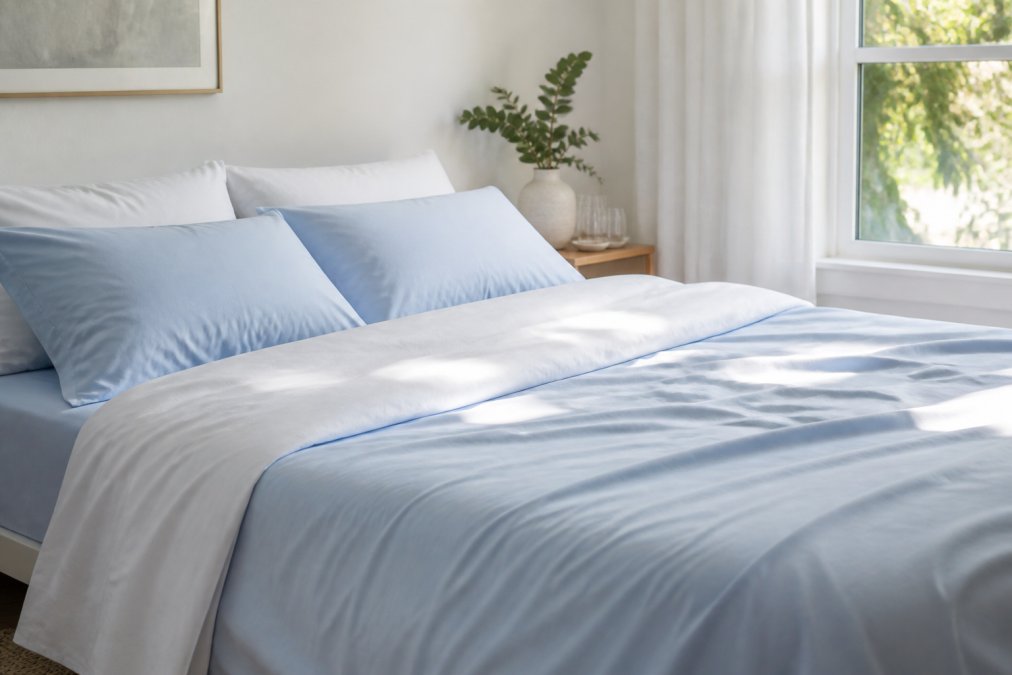
The TENCEL™ Lyocell & Linen Blend Sheet Set is our top recommendation for hot sleepers because linen offers superior airflow while lyocell provides exceptional moisture-wicking properties. For a budget-friendly option that still feels cool, the Jersey Sheet offers a soft, casual feel that adapts to seasonal temperatures.

How We Found the Best Breathable Sheets
These picks are based on published specifications and product attributes — fiber content, weave, and manufacturer care requirements — rather than hands-on testing.
TENCEL™ lyocell, derived from eucalyptus wood, is known for its silky soft feel and excellent humidity control. Linen, one of the oldest natural fibers, offers a crisp feel and unmatched breathability due to its loose weave and hollow fibers. Cotton, particularly in a percale weave, provides a lightweight and crisp feel that many sleepers prefer.
Cooling Sheets for Night Sweats: What Actually Works
Night sweats differ from simply sleeping warm. When your core temperature spikes, due to hormonal shifts, medications, or anxiety, you produce sweat that must be managed quickly. The key metric isn't just breathability; it's how fast a fabric absorbs moisture from your skin and releases it for evaporation.
The Science of Evaporative Cooling
Sheets that trap sweat interrupt this process, leaving you damp and overheated. The ideal night-sweat sheet wicks moisture away, spreads it across a large surface area, and releases it quickly to the air.
Fabric absorbency and drying speed matter most. Cotton absorbs up to 25% of its weight in moisture before feeling wet, but dries slowly (peer-reviewed research). TENCEL™ lyocell fibers are highly hydrophilic, and their fibril structure moves moisture via capillary action rather than trapping it in the yarn. Linen's hollow fibers create natural channels for air and moisture transport.
How Different Fibers Perform Under Real Sweat Conditions
Here's what happens when you actually sweat through the night:
- TENCEL™ lyocell: Absorbs moisture rapidly and wicks it away from the skin through its fibril structure. Dries faster than cotton, preventing that wet, sticky feeling. The smooth fiber surface also means less friction against sensitive, sweat-irritated skin.
- Linen: The hollow structure of linen fibers creates natural air pockets that promote airflow. Linen can absorb up to 20% of its weight in moisture while still feeling dry to the touch. Its loose weave allows heat to escape, making it excellent for heavy sweaters.
- Cotton percale: A tight plain weave with good airflow, but cotton's fibers swell when wet, which can close the gaps between yarns and reduce breathability exactly when you need it most. Cotton also holds moisture longer, which can leave you feeling damp.
- Bamboo viscose: Highly absorbent and soft, but the manufacturing process can leave the fibers less structured than lyocell, which may reduce its drying speed.
Why Synthetic Blends Fail Hot Sleepers
Polyester and nylon are hydrophobic, they repel water. When you sweat, these fabrics trap moisture between the fiber and your skin, creating a damp, clammy feeling that can make you feel colder once the sweat stops.
What to Look For in Night-Sweat Sheets
When shopping specifically for night sweats, look for:
- Fiber content: Natural or semi-synthetic fibers that absorb moisture, TENCEL™ lyocell, linen, or high-quality cotton percale
- Weave structure: Loose weaves like percale or plain weaves that allow air circulation
- Fabric weight: Lighter fabrics (under 150 gsm) dry faster and feel cooler against the skin
- Absorbency rate: Look for fibers that can handle significant moisture without feeling wet
The Role of Layering for Severe Night Sweats
For severe night sweats, consider layering: a lightweight, moisture-wicking sheet against your skin paired with a breathable blanket on top creates a microclimate that manages both moisture and temperature.
Our TENCEL™ Lyocell & Linen Blend Sheet Set was designed specifically for this purpose. The lyocell component handles rapid moisture absorption and wicking, while the linen provides structural airflow channels. Together, they address the two primary problems night sweaters face: getting wet and staying wet.
Bamboo vs Cotton Sheets for Temperature Regulation
Bamboo viscose is prized for its silky soft texture, hypoallergenic properties, and excellent moisture-wicking, making it a strong contender for temperature regulation.
Percale is crisp, lightweight, and breathable; sateen is smoother but denser and warmer. For bamboo vs cotton sheets for temperature regulation, bamboo viscose generally edges out cotton in moisture-wicking, but high-quality long-staple cotton percale remains an excellent, durable choice.
Our Adjustable Bamboo Cooling Pillow provides a natural complement to your bedding. Its bamboo viscose cover is breathable and hypoallergenic, while the shredded gel-infused memory foam fill can be adjusted to your preferred loft, ensuring you don't trap heat at your head and neck.
How to Choose Cooling Bedding Materials: A Practical Guide
Choosing cooling sheets isn't just about fabric, your mattress, pillow, and sleepwear all interact with your sheets to determine your nighttime temperature.
The Mattress Factor Most Guides Ignore
Here's what happens with different mattress types:
Memory foam is the worst offender for hot sleepers. Its viscoelastic properties soften with body heat but also retain it, running 3-5°F warmer than innerspring or latex during the first hours of sleep. No sheet alone will fully solve this, you need a cooling mattress protector or pad as your first line of defense.

Latex mattresses, particularly Talalay, have open cell structures that promote airflow, sleeping cooler than memory foam but warmer than innerspring. Percale or linen pairs well with latex.
Matching Your Sheet Choice to Your Mattress
| Mattress Type | Heat Profile | Best Sheet Strategy |
|---|---|---|
| Memory Foam | High heat retention | Cooling mattress pad + moisture-wicking sheets (TENCEL™ or linen) |
| Innerspring | Low heat retention | Breathable percale cotton or linen for maximum airflow |
| Latex | Moderate heat retention | TENCEL™ lyocell or bamboo viscose for moisture management |
| Hybrid | Varies | Depends on comfort layer, check if it contains memory foam |
Allergy and Skin Sensitivity Considerations
Hot sleepers often have sensitive skin, sweat, friction, and heat can trigger irritation, especially with eczema or contact allergies. Consider these factors:
- Hypoallergenic fibers: Organic linen and TENCEL™ lyocell are naturally hypoallergenic. Linen's coarse texture can irritate very sensitive skin initially, but it softens significantly with washing. TENCEL™ lyocell is smooth and gentle from the first night.
- Chemical sensitivities: Bamboo viscose requires heavy chemical processing to convert bamboo pulp into fiber. If you have chemical sensitivities, look for bamboo lyocell (which uses a closed-loop process) rather than bamboo viscose. TENCEL™ lyocell uses a closed-loop process that recycles 99% of solvents (lenzing.com).
- Fabric finishes: Some sheets are treated with chemical finishes to create a "cooling" effect or wrinkle resistance. These finishes can off-gas and irritate sensitive skin. Look for sheets labeled "chemical-free" or "OEKO-TEX certified" to avoid unnecessary treatments.
- Dust mite resistance: Tightly woven cotton percale (200-400 thread count) naturally resists dust mites because the weave prevents them from penetrating the fabric. This makes percale a good choice for allergy sufferers who also sleep hot.
How These Fabrics Age With Washing
Most sheet reviews cover first impressions, but cooling performance changes with washing. Here is how these fibers are generally expected to age with repeated laundering:
TENCEL™ lyocell: Maintains its moisture-wicking properties well. The fibers are strong and resist pilling. Expect minimal degradation in cooling performance over six months. Color may fade slightly with repeated washing.
Its cooling properties actually improve as the fibers relax and the weave loosens slightly. Linen is one of the most durable natural fibers, quality linen sheets can last 10+ years with proper care.
Cotton percale: Holds up well structurally. The crisp feel softens after several washes, which most sleepers prefer. Cooling performance remains consistent. Watch for pilling in lower-quality cotton, long-staple cotton (Egyptian, Pima, Supima) resists pilling better than short-staple varieties.
The silky finish can degrade after 20-30 washes. Cooling performance may diminish as the fabric loses its smooth surface.
Synthetic blends: Chemical moisture-wicking finishes degrade significantly after 20-30 washes. The fabric itself doesn't breathe well, so any initial cooling benefit disappears quickly.
Environmental Impact of Cooling Fibers
For eco-conscious hot sleepers, here's how the main cooling fibers compare environmentally:
- Conventional cotton: Requires significant water, approximately 2,700 liters to produce one t-shirt's worth of cotton. Pesticide use is heavy in conventional farming. Organic cotton eliminates pesticides but still uses substantial water.
- Bamboo viscose: Bamboo itself grows rapidly with minimal water and no pesticides. However, the viscose process uses carbon disulfide, a toxic chemical, and produces hazardous waste. Most bamboo viscose on the market is not truly sustainable despite green marketing.
- TENCEL™ lyocell: Made from eucalyptus wood sourced from certified sustainable forests. The closed-loop process recycles 99% of solvents, making it one of the most environmentally responsible cellulosic fibers available. Uses significantly less water than cotton.
- Linen: Flax requires minimal water and no irrigation in most growing regions. It's naturally pest-resistant, eliminating pesticide needs. Linen is fully biodegradable and one of the most sustainable natural fibers.
A Decision Framework for Your Specific Situation
Step 1: Identify your primary issue
- Sleep warm but don't sweat much → Prioritize airflow (linen or cotton percale)
- Wake up sweaty or damp → Prioritize moisture-wicking (TENCEL™ lyocell or bamboo lyocell)
- Both warm and sweaty → Look for a blend like TENCEL™ + linen
Step 2: Check your mattress
- Memory foam → Add a cooling mattress protector first
- Innerspring or latex → Sheets alone may be sufficient
Step 3: Consider your sensitivities
- Sensitive skin → Choose TENCEL™ lyocell or organic cotton percale
- Allergies → Tightly woven percale or linen
- Chemical sensitivities → Avoid bamboo viscose; choose closed-loop lyocell
Step 4: Set your budget
- Under $50 → Look for cotton percale or cotton-polyester blends with percale weave
- $50-$100 → Quality TENCEL™ lyocell or cotton percale options
- $100+ → Linen or TENCEL™/linen blends for maximum durability and cooling
Understanding Weave and Thread Count Myths
The weave determines breathability. Percale is a plain, one-over-one-under weave creating a matte, crisp finish with excellent airflow. Sateen is a four-over-one-under weave that is silkier but denser and traps more heat.
For cooling sheets, focus on percale or linen, where 200-400 is ideal for durability and airflow.
Which of Our Top Picks Should You Choose?
If you struggle with night sweats, the TENCEL™ Lyocell & Linen Blend Sheet Set is the clear winner. At $99.99, it offers the durability of linen with the softness of lyocell, making it a long-term investment in your sleep quality.
For those on a budget or who prefer a cozier feel, the Jersey Sheet at $49.99 is a versatile choice. For a complete cooling setup, pair your sheets with the Waterproof Tencel Mattress Protector to add a moisture-wicking barrier, especially useful on a heat-retaining memory foam bed.

| Pick | Product | Best For | Price |
|---|---|---|---|
| Best Overall | TENCEL™ Lyocell & Linen Blend | Night sweats & durability | $99.99 |
| Best Budget | Jersey Sheet - Carmen | Softness & year-round use | $49.99 |
| Best Add-On | Waterproof Tencel Protector | Mattress protection & cooling | $34.99 |
Conclusion
Choosing the best breathable sheets for hot sleepers means looking past high-thread-count marketing and focusing on material science. Natural fibers like TENCEL™ lyocell and linen offer superior moisture-wicking and airflow. Our top pick, the TENCEL™ Lyocell & Linen Blend Sheet Set, combines these properties with long-lasting durability.
At Betterhouse, we focus on real-world durability and thoughtful design to provide high-quality goods that perform reliably without the premium price tag. Upgrade your sleep with cooling, breathable textiles designed to work as hard as you do.
Frequently Asked Questions
What is the best material of sheets for hot sleepers?
Tencel lyocell, bamboo viscose, and linen are top choices because of their moisture-wicking and temperature-regulating fibers. Cotton percale is also excellent for its crisp, breathable weave. Avoid synthetic blends like polyester that trap heat. For a balance of durability and cooling, a Tencel and linen blend like the Magdalena Collection offers both airflow and lasting comfort.
Are cotton or bamboo sheets better for hot sleepers?
Bamboo viscose generally outperforms cotton for temperature regulation due to its higher thermal conductivity and moisture-wicking properties. However, cotton percale offers superior airflow through its tight, crisp weave. Your choice depends on feel: bamboo is silky soft, while percale is more matte and crisp. Both beat sateen weaves for keeping you cool through the night.
How do cooling sheets actually work to regulate body temperature?
Cooling sheets work by moving heat and moisture away from your skin. Fabrics like Tencel lyocell and bamboo viscose have fibers that wick sweat, allowing it to evaporate quickly, which creates a cooling effect. The weave also matters: a breathable percale weave allows more airflow than a tight sateen. This combination of fiber and weave helps dissipate body heat instead of trapping it.
Do thread counts matter when choosing breathable bedding?
A very high thread count (above 600) often means a denser weave that traps heat, making it a poor choice for hot sleepers. For breathable sheets, focus on the fiber and weave rather than the number. A 200-400 thread count in a percale weave or a fabric like Tencel lyocell offers better airflow and a cooler sleep experience.
Ready to sleep cool and wake up refreshed? Explore our curated selection of cooling bedding and experience the difference that quality materials make. Get started with Betterhouse and invest in a better night's rest.