

Best overall: flush mount LED ceiling light. Best for high ceilings: semi-flush mount LED. Best budget option: LED ceiling panel light. Best for smart control: smart LED ceiling light. Best for large or formal rooms: LED chandelier-style fixture.
- A flush mount LED ceiling light is the best led ceiling lights for living room pick for most rooms with 8-foot ceilings in 2026.
- Semi-flush mount LED fixtures work better once ceilings pass 9 feet, adding visual height without a full pendant drop.
- LED ceiling panels give the most even, shadow-free light for the least money — the budget pick for 2026.
- Smart LED ceiling lights add app and voice dimming but depend on stable home Wi-Fi.
- LED chandelier-style fixtures work as a decor focal point in large or formal living rooms, not small ones.
Why this matters
A living room does two jobs at once: movie nights need dim, warm light, and reading or hosting needs bright, neutral light. A fixture that can't shift between the two leaves you squinting at 7pm or feeling like you're sitting in a waiting room. The category split into five real fixture types by 2026, and each one solves a different living room problem — ceiling height, wiring access, dimmer compatibility, or budget.
Get the fixture type wrong and you're either re-drilling a ceiling box or stuck with light that's too dim for guests and too harsh for a movie. Betterhouse carries living room decor and lighting layers that pair with any of the five picks below — a corner lamp fills in shadows a single ceiling fixture always leaves behind.
What makes the best LED ceiling light for a living room
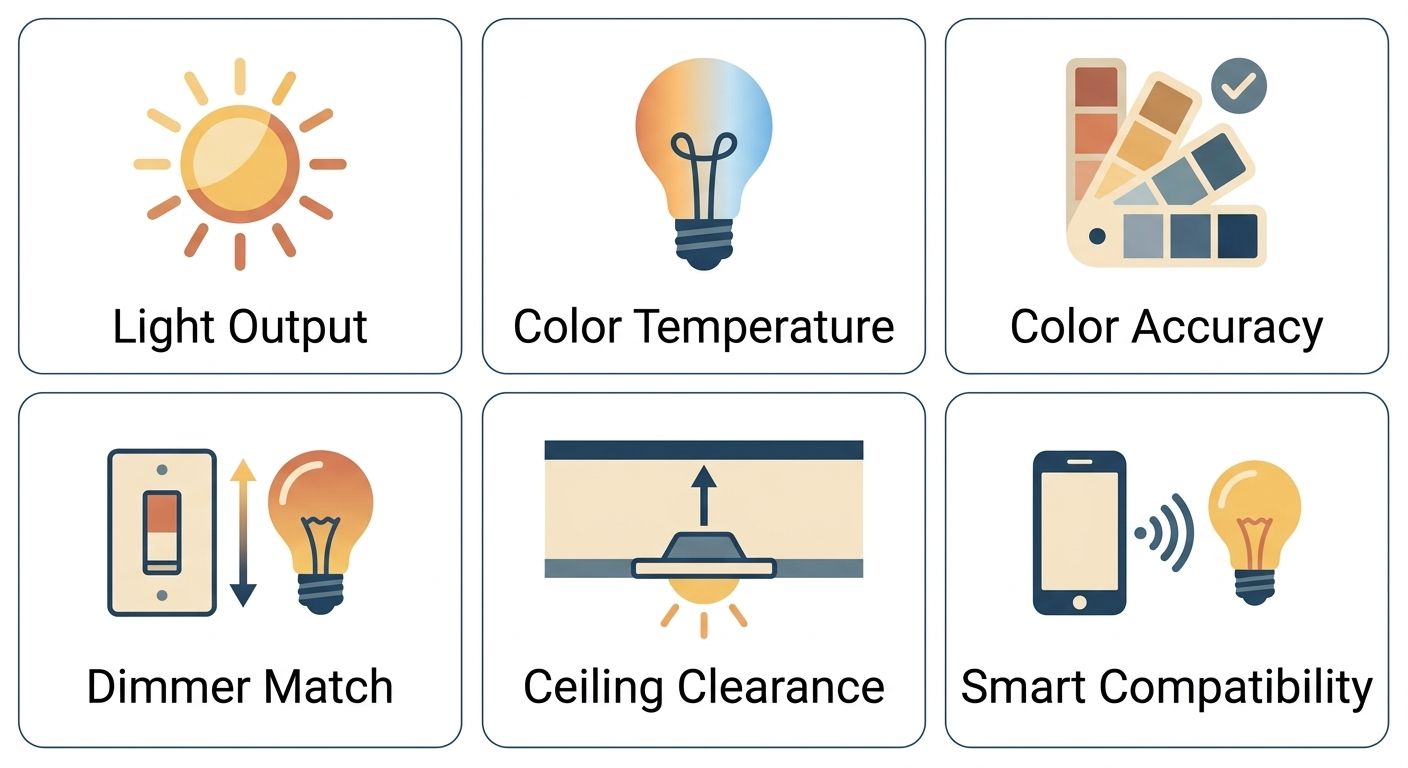
- Light output matched to room size — living rooms need roughly 10-20 lumens per square foot of ambient light, based on standard residential lighting-design guidelines.
- Adjustable color temperature — 2700K-3000K reads warm and cozy for evenings; 4000K-5000K reads bright and neutral for daytime tasks.
- CRI of 90 or higher — below that, skin tones, wood finishes, and fabric colors look washed out under the fixture.
- Dimmer compatibility — the LED driver has to match your dimmer switch, or the light flickers and buzzes at low settings.
- Ceiling clearance and mounting depth — flush and semi-flush fixtures need different drop heights depending on how tall the ceiling actually is.
- Smart home compatibility — optional, but worth checking if the household already runs Alexa, Google Home, or Apple HomeKit routines.
LED ceiling lights for living rooms, at a glance
| Fixture type | Best for | Standout feature | Key limitation |
|---|---|---|---|
| Flush mount LED | Most living rooms, ceilings 8 ft and under | Sits nearly flush against the ceiling | Fewer style options than a pendant |
| LED ceiling panel | Budget-conscious upgrades | Even, shadow-free light spread | Flat look reads more office than living room |
| Semi-flush mount LED | Ceilings 9 ft and taller | Small drop adds visual height without a full pendant | Looks oversized on a standard 8-foot ceiling |
| Smart LED ceiling light | App or voice-controlled scenes | Dimming and color temperature adjust from a phone or voice command | Needs stable home Wi-Fi and app setup |
| LED chandelier-style fixture | Large or formal living rooms | Multi-arm design works as a decor focal point, not just a light source | Overwhelms small or low-ceiling rooms |
1. Flush mount LED ceiling light: best LED ceiling light for most living rooms
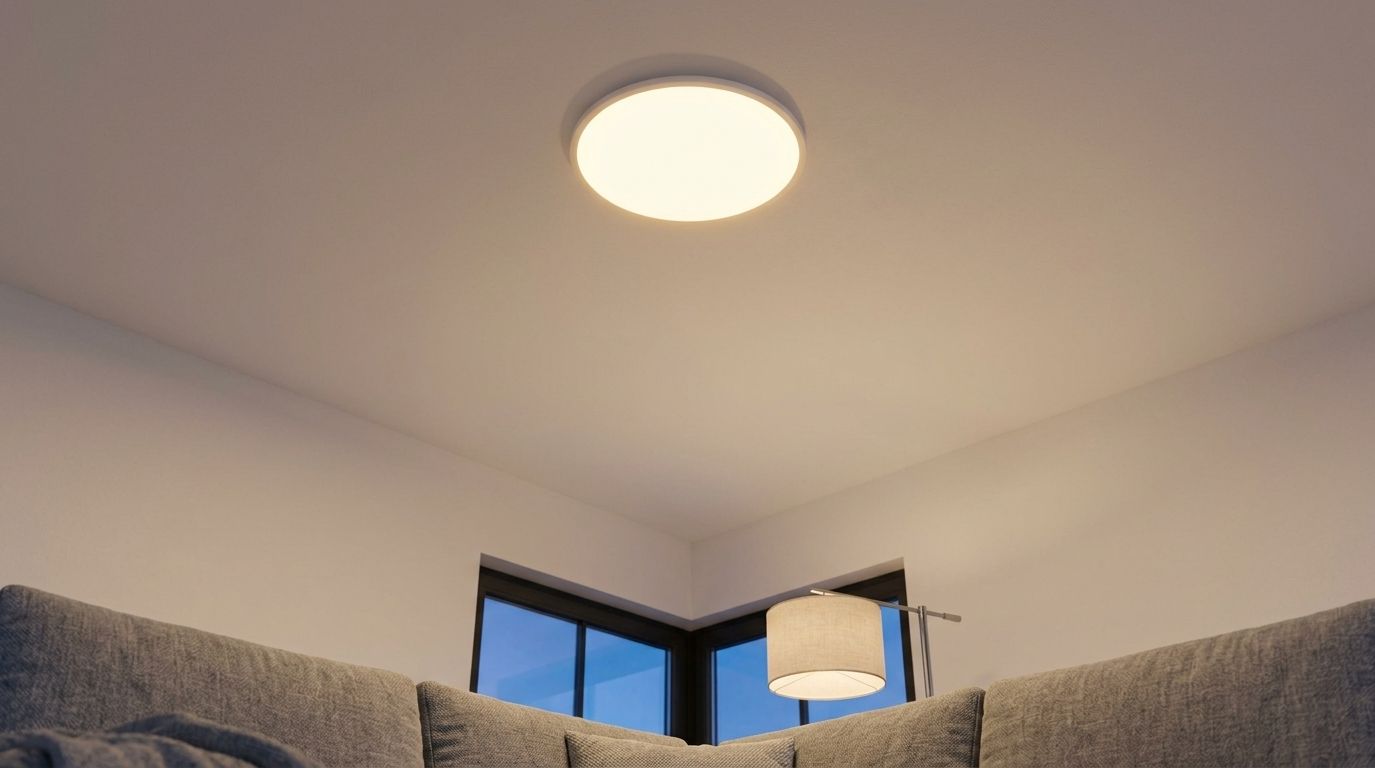
A flush mount LED fixture sits directly against the ceiling with no visible drop, which is why it's the default pick for standard 8-foot living room ceilings. Most models cover a 10x12-foot room comfortably at the 10-20 lumens per square foot target, and many now ship with a built-in color temperature switch instead of a fixed bulb.
Flush mount LED pros:
- Low profile clears doorways and low ceilings without looking cramped
- Covers a full room evenly instead of casting one bright pool in the center
- Easiest type to install without hiring an electrician for a straight swap
Flush mount LED cons:
- Design options run toward plain and round; not a strong decor statement
- Fixed drivers on cheaper models can't be dimmed even with a compatible switch
Best for: everyday living rooms with standard ceiling height. Verdict: Buy.
2. LED ceiling panel light: best budget LED ceiling light for living rooms
A flat LED panel mounts close to the ceiling and spreads light through a diffuser instead of a single bulb, so there's no visible bright spot or glare when you look up. This is the type most often installed as a straight replacement for an old fluorescent fixture.
LED ceiling panel pros:
- Even, glare-free light across the whole panel surface
- Typically the least expensive fixture type in this category
- Slim profile works in rooms with low ceilings
LED ceiling panel cons:
- Square or rectangular shape looks utilitarian, closer to office lighting than living room decor
- Limited style variation compared to flush mount or chandelier options
Best for: shoppers prioritizing even light over decor style. Verdict: Buy if budget is the deciding factor.
3. Semi-flush mount LED light: best LED ceiling light for high ceilings
A semi-flush mount drops a few inches from the ceiling on a short stem, which reads better than a flat flush mount once ceilings climb past 9 feet. The small gap keeps the fixture from looking lost against a tall, empty ceiling.
Semi-flush mount LED pros:
- Adds visual height and a decor moment without a full pendant drop
- Works well over a coffee table or seating area as a focal point
- Still throws broad, even light across the room
Semi-flush mount LED cons:
- Looks oversized or awkward on a standard 8-foot ceiling
- Slightly harder to install than a true flush mount because of the mounting stem
Best for: living rooms with 9-foot or taller ceilings. Verdict: Buy for tall rooms, skip for standard ones.
4. Smart LED ceiling light: best LED ceiling light for app and voice control
A smart LED ceiling light connects to home Wi-Fi and lets you shift color temperature and brightness from a phone app or a voice assistant instead of a wall switch. Some models support scheduled scenes, so the fixture warms up automatically in the evening.
Smart LED ceiling light pros:
- Color temperature and dimming adjust without buying a separate smart switch
- Scenes and schedules automate the warm-evening, bright-daytime shift
- Works alongside other smart home routines already running in the house
Smart LED ceiling light cons:
- Depends on a stable home Wi-Fi connection; drops in signal cause lag or disconnects
- App setup adds a step most other fixture types don't require
- Firmware updates on cheaper models can be inconsistent
Best for: households already running Alexa, Google Home, or HomeKit. Verdict: Buy if the smart home ecosystem is already in place.
5. LED chandelier-style ceiling fixture: best LED ceiling light for large or formal living rooms
A chandelier-style LED fixture uses multiple arms or a tiered design instead of one bulb source, working as a decor centerpiece as much as a light source. It's the pick for open-concept or double-height living rooms where a flush mount would disappear.
LED chandelier pros:
- Doubles as a decor focal point above a seating area
- Multiple LED points distribute light more evenly across large rooms than a single source
- Available in styles that match formal, traditional, or modern rooms
LED chandelier cons:
- Overwhelms small rooms or low ceilings visually
- Heavier fixtures may need reinforced ceiling mounting
Best for: large or formal living rooms with high ceilings. Verdict: Buy for statement rooms, skip for small apartments.
How we ranked
Each fixture type is scored against the six criteria above: brightness matched to typical living room square footage, color temperature range, CRI, dimmer compatibility, ceiling clearance requirements, and smart home support. The flush mount ranks highest overall because it satisfies the brightness and dimmer criteria for the most common ceiling height in US living rooms without a style trade-off. Items lower on the list win on a narrower slice — high ceilings, budget, smart control, or formal decor — rather than losing on the same scale.
Which LED ceiling light should you choose?
For a standard living room with an 8-foot ceiling and no strong style demands, the flush mount LED ceiling light is the right default for 2026. If the ceiling runs 9 feet or taller, move to a semi-flush mount instead — a flat flush mount will look lost on a tall ceiling. Working with a tight budget points to an LED ceiling panel, and a household already using Alexa or Google Home routines gets more value out of a smart LED ceiling light. Large, open-concept, or formal rooms are the one case where a chandelier-style fixture earns its visual weight instead of overwhelming the space.
FAQ
What is the best led ceiling lights for living room in 2026?
A flush mount LED ceiling light is the best overall pick for most living rooms with standard 8-foot ceilings in 2026. It delivers even brightness, wide color temperature range, and dimmer compatibility without the style trade-offs of a ceiling panel.
Is a semi-flush mount LED better than a flush mount for a living room?
A semi-flush mount is better only when the ceiling is 9 feet or taller. On a standard 8-foot ceiling, a flush mount sits closer and looks more proportional.
How bright should an LED ceiling light be for a living room?
Aim for roughly 10-20 lumens per square foot of ambient light, based on standard residential lighting-design guidance. A 200-square-foot living room lands in the 2,000-4,000 lumen range total.
What color temperature is best for a living room LED ceiling light?
2700K-3000K reads warm and cozy for evening use, while 4000K-5000K reads brighter and more neutral for daytime tasks. Fixtures with an adjustable color temperature switch cover both without buying two lights.
Do LED ceiling lights need a special dimmer?
Yes — the LED driver inside the fixture has to be compatible with the dimmer switch on the wall, or the light flickers or buzzes at low settings. Check the fixture's dimmer compatibility list before wiring it to an existing dimmer.
Are smart LED ceiling lights worth it for a living room?
Smart LED ceiling lights are worth it if the household already runs Alexa, Google Home, or HomeKit scenes, since app and voice control add real convenience. Without an existing smart home setup, the Wi-Fi dependency and app setup add friction for little extra benefit.
What CRI should an LED ceiling light have?
Look for a CRI of 90 or higher. Below that, skin tones, wood furniture, and fabric colors look noticeably washed out under the light.
Can an LED chandelier work in a small living room?
An LED chandelier-style fixture generally overwhelms a small or low-ceiling living room visually. It performs best in large, open-concept, or formal rooms with higher ceilings.
One last thing
A single ceiling fixture, no matter how well it scores on brightness and CRI, still leaves shadows in the corners of a living room — that's a layout problem, not a light problem. Adding a wall-mounted LED lamp, like a Modern Black LED Wall Lamp designed for living room and corridor use, fills in those dead zones without touching the ceiling fixture's wiring. Pair the ceiling pick from this list with one layer of side lighting before deciding the room is done.