

Betterhouse ranks a brushed microfiber bed-in-a-bag as the best microfiber bedding set for kids in 2026 because it coordinates the whole bed and suits everyday use. An OEKO-TEX Standard 100 certified set is best for shoppers prioritizing textile testing, a sheet-only set is the best budget option, and families in cold climates should also compare flannel bedding sets for winter.
- Betterhouse ranks brushed bed-in-a-bag sets as the best microfiber bedding sets for kids in 2026.
- Choose an OEKO-TEX Standard 100 certified set when finished-textile testing is a priority.
- Sheet-only microfiber sets are the budget pick and work well as spare bedding.
- Reversible printed comforter sets are best for kids whose room themes change often.
- Lightweight microfiber suits warm rooms, but hot sleepers may prefer cotton percale.
Why this matters
Microfiber describes very fine synthetic fibers, usually polyester, measuring less than 1 denier per strand. The fine yarns create a smooth surface, resist wrinkles and dry faster than many heavier fabrics. Those practical qualities make microfiber common in bedding designed for busy family homes.
The material name does not tell you whether a set will feel cool, warm, thin or plush. Fabric weight, brushing, weave, comforter fill and finishing all change the result. A microfiber label also does not automatically mean the bedding is breathable, hypoallergenic or free from substances a household wants to avoid.
Sizing creates another failure point. A standard US twin mattress measures 38 x 75 inches, while a standard full measures 54 x 75 inches. Mattress depth varies, so the fitted sheet pocket depth still needs to match the bed. Betterhouse treats fit as a buying criterion rather than assuming every twin or full set fits every mattress carrying that label.
What makes the best microfiber bedding set for kids
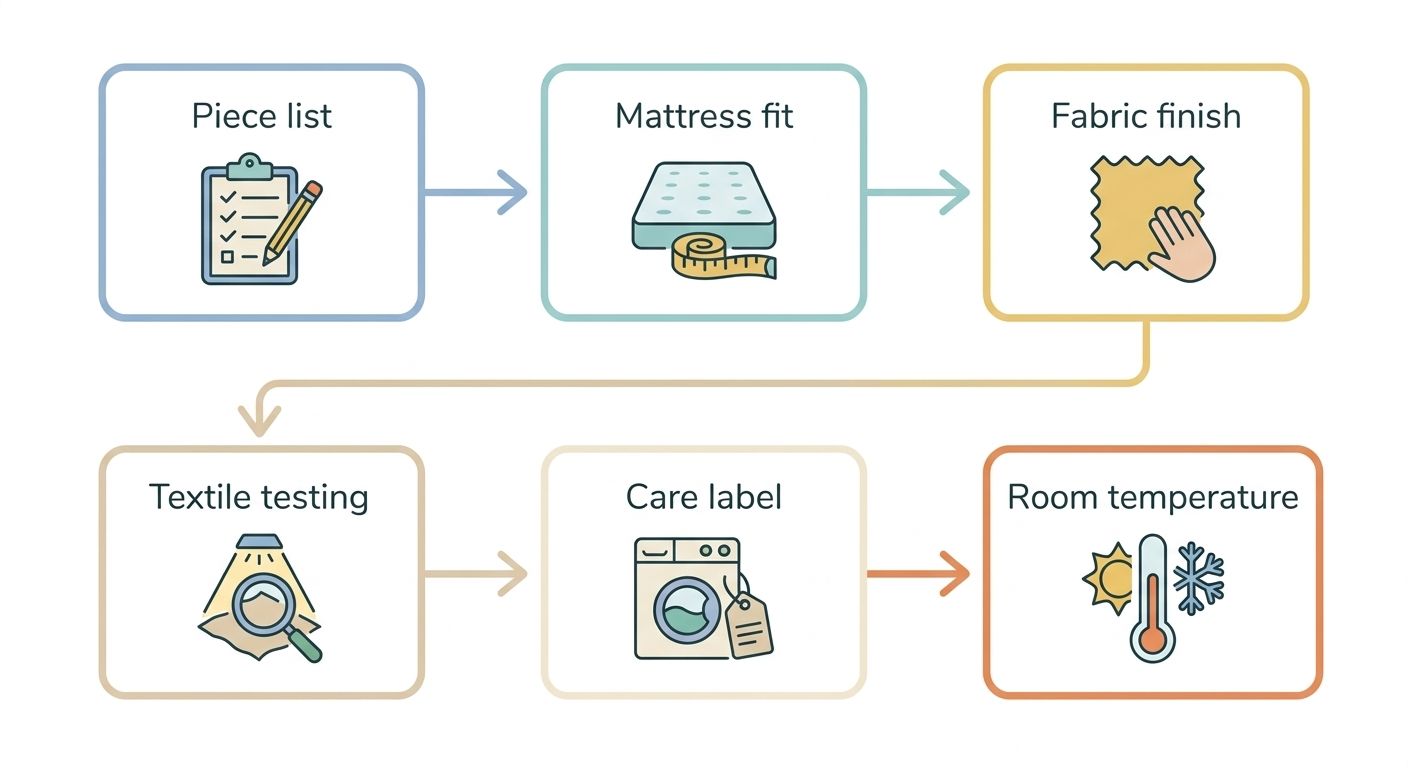
- Piece list: Check whether the package contains sheets, pillowcases, shams and a comforter. A coordinated set is only useful when it includes the pieces you need.
- Mattress fit: Match the fitted sheet pocket depth to the mattress. For bunk beds, avoid excess fabric that becomes difficult to tuck safely.
- Fabric finish: Brushed microfiber feels softer and warmer. Unbrushed or lightly brushed fabric generally feels smoother and less plush.
- Textile testing: OEKO-TEX Standard 100 means the finished textile and its components were tested against the standard's limits for harmful substances. It does not certify the material as organic.
- Care label: Confirm machine-washing and drying instructions before buying. Printed designs, comforter fill and decorative trim can require different care from plain sheets.
- Room temperature: Microfiber can retain more warmth than an airy cotton percale weave. Choose lighter construction for warm rooms and thicker bedding for cooler rooms.
Best microfiber bedding sets for kids at a glance
| Rank | Set type | Best for | Standout feature | Key limitation |
|---|---|---|---|---|
| 1 | Brushed microfiber bed-in-a-bag | Everyday kids' rooms | Coordinates sheets and top bedding | Bundled comforter may feel too warm |
| 2 | Microfiber sheet set | Spare bedding and budget shoppers | Easy to mix with an existing quilt | Does not include top bedding |
| 3 | OEKO-TEX certified microfiber set | Shoppers prioritizing textile testing | Finished-textile testing | Certification does not make it organic |
| 4 | Reversible printed comforter set | Theme-driven rooms | Two visible designs | Prints can date faster than solids |
| 5 | Microfiber quilt set | Bunk beds and layered bedding | Less bulky than a comforter | Provides less insulation alone |
| 6 | Lightweight microfiber sheet set | Warm bedrooms | Lighter construction | Not the coolest fabric category overall |
1. Brushed bed-in-a-bag: best overall microfiber bedding set
A brushed microfiber bed-in-a-bag combines fitted and flat sheets, pillow coverings and top bedding in one coordinated package. Exact contents vary, so compare the piece list rather than relying on the bed-in-a-bag label alone.
This format wins for an everyday kids' room because it removes color-matching guesswork. It also gives you a complete starting point when furnishing an empty bed, although the bundled comforter can be unnecessary if the child already has a quilt they like.
Brushed bed-in-a-bag pros:
- Coordinates the visible bedding in one package
- Brushed fabric has a softer, less slick surface
- Polyester microfiber resists wrinkles
- Useful when furnishing a room from scratch
Brushed bed-in-a-bag cons:
- The comforter can feel warm in a hot bedroom
- Replacing one damaged piece can break the coordinated look
- Package contents and fabric weight vary
Best for: families who want a complete, coordinated bed without mixing separate collections.
Verdict: Buy when you need both sheets and top bedding.
2. Microfiber sheet set: best budget option
A sheet-only set usually focuses on a fitted sheet, flat sheet and pillow coverings. It leaves the comforter or quilt choice open, making it practical when the room already has usable top bedding.
This is also the easiest category to keep as spare bedding. A backup set lets you remake the bed while the primary set is being washed, but it does not solve warmth or room styling by itself.
Microfiber sheet set pros:
- Works with an existing quilt or comforter
- Simple to store as a spare set
- Easier to replace than a fully coordinated package
- Available in plain colors that outlast short-lived themes
Microfiber sheet set cons:
- Does not provide top bedding
- Thin options can feel less substantial
- Color matching depends on the bedding already in the room
Best for: families replacing worn sheets or building a practical wash-day backup.
Verdict: Buy for spare bedding; hold if the bed also needs a comforter.
3. OEKO-TEX certified microfiber: best for textile testing
OEKO-TEX Standard 100 applies to a finished textile and its components, including items such as thread, buttons and printed coatings where relevant. The certification addresses testing for harmful substances under the standard; it does not turn polyester into a natural or organic fiber.
Check the listing or packaging for the specific certification rather than accepting vague phrases such as tested fabric. Families comparing materials should also separate chemical testing from allergy claims, because the two are not interchangeable.
Certified microfiber pros:
- Provides a named finished-textile testing standard
- Covers components beyond the main fabric
- Gives shoppers a clearer criterion than an undefined safety claim
Certified microfiber cons:
- Does not certify organic content
- Does not guarantee a cool sleeping surface
- Does not replace checking the care label and construction
Best for: shoppers who want a recognized testing standard attached to the finished bedding.
Verdict: Buy when certification is a priority; skip listings that make broad safety claims without naming a standard.
4. Reversible printed comforter set: best for theme decor
A reversible comforter gives a child two visible designs without requiring storage for a second comforter. One side can carry a busier pattern while the reverse uses a simpler print or solid color, depending on the set.
This category works best when sheets remain neutral. The room can change appearance by flipping the comforter, while the fitted sheet and pillowcases continue to work with both sides.
Reversible printed set pros:
- Changes the bed's look without changing the whole set
- Makes a theme easy to introduce or tone down
- Coordinates more easily when one side is neutral
Reversible printed set cons:
- A child can outgrow the theme before the fabric wears out
- Print quality and alignment vary
- Decorative shams may add pieces a younger child does not need
Best for: kids who care about room themes and families that want a second look without another comforter.
Verdict: Buy when both sides suit the room; skip a set chosen for only one acceptable side.
5. Microfiber quilt set: best for bunk beds
A microfiber quilt set uses a thinner top layer than a lofty comforter. That makes the bedding easier to fold, tuck and remove on a bunk bed, where reaching the wall side of the mattress can be awkward.
Quilts also support seasonal layering. You can use the quilt by itself in a warm room or add another approved layer when the room is cold. The trade-off is less insulation from the quilt alone.
Microfiber quilt set pros:
- Less bulky to handle on a bunk or loft bed
- Creates a flatter, tidier bed surface
- Works as part of a layered bedding setup
- Easier to fold for storage than a thick comforter
Microfiber quilt set cons:
- Offers less warmth by itself
- Decorative stitching can snag if poorly finished
- A set may include shams instead of standard pillowcases
Best for: bunk beds, loft beds and rooms where bulky comforters are difficult to manage.
Verdict: Buy for easier bed-making; hold if maximum warmth is the main need.
6. Lightweight microfiber sheets: best for warm rooms
Lightweight microfiber is the best option within this material category for a bedroom that stays warm. Choose a smooth, lightly brushed construction and pair it with a separate light top layer rather than a thick bundled comforter.
Microfiber is still polyester, so shoppers focused primarily on airflow should compare it with cotton percale or linen. Calling any microfiber set cooling without construction details does not tell you how it will feel in a specific room.
Lightweight microfiber pros:
- Less bulky than heavily brushed microfiber
- Dries quickly after washing
- Works with a separate quilt or blanket
- Suitable for households that dislike a plush sheet surface
Lightweight microfiber cons:
- Can feel less substantial than heavier bedding
- Polyester microfiber is not the most breathable fabric category
- Requires another layer when the room turns cold
Best for: warm bedrooms where easy care matters more than a plush feel.
Verdict: Buy for a warm room; skip microfiber entirely if maximum breathability is the priority.
When microfiber is not the right choice
Microfiber should not win by default. Cotton percale is the stronger direction for sleepers who prioritize airflow, while cotton flannel suits cold rooms and people who prefer a warmer, brushed natural fiber. A quilt can also make more sense than a comforter when the bed is difficult to reach.
Betterhouse carries cotton flannel alternatives for shoppers who decide microfiber is too light or synthetic for the room. These are alternatives, not microfiber recommendations.


Shoppers who prefer a quilt format can also review the Redwood Lodge quilt set. Check its current listing for available sizes, included pieces and care instructions before matching it to a child's bed.
How Betterhouse ranked the 2026 options
Betterhouse's microfiber bedding ranking uses six decision points: included pieces, mattress fit, fabric finish, textile testing, care instructions and room temperature. The ranking favors the set type that solves a distinct household problem rather than pretending one construction is ideal for every child.
The brushed bed-in-a-bag takes first place because it covers the broadest furnishing need. Sheet-only sets rank second because they solve replacement and wash-day needs efficiently. Certified, reversible, quilted and lightweight options follow because each becomes the better choice only when testing, decor, bed access or room temperature takes priority.
Which microfiber bedding set should you choose?
Choose a brushed microfiber bed-in-a-bag if you are furnishing the whole bed in 2026 and want one coordinated purchase. Choose a sheet-only set when the room already has a quilt or comforter. Pick an OEKO-TEX Standard 100 certified set when named textile testing is non-negotiable.
A reversible printed comforter wins for theme-driven decor, while a microfiber quilt is easier to manage on bunk beds. Lightweight microfiber is the category choice for a warm room, but cotton percale remains the stronger material direction when airflow matters most.
Betterhouse's 2026 default is clear: buy for fit and room conditions first, then choose the color or print.
“Buy for fit and room conditions first, then choose the color or print.”
FAQ
What is the best microfiber bedding set for kids in 2026?
A brushed microfiber bed-in-a-bag is the best overall option for kids in 2026 when the bed needs sheets and a comforter. Choose a different format when breathability, bunk-bed access or textile testing is the main concern.
Is microfiber good for children's bedding?
Microfiber is a practical children's bedding material because it resists wrinkles, dries quickly and has a smooth surface. Its warmth and feel depend on fabric weight, brushing and the top bedding included.
Is microfiber better than cotton for kids?
Microfiber is better for wrinkle resistance and fast drying, while cotton is generally better for shoppers prioritizing natural fibers and airflow. The room temperature and laundry routine determine which trade-off matters more.
Does OEKO-TEX certified microfiber prevent allergies?
No, OEKO-TEX Standard 100 certification does not mean a microfiber set prevents allergies. It means the finished textile and its components were tested against the standard's limits for harmful substances.
How much does a microfiber bedding set for kids cost?
The cost depends on bed size, construction and the number of included pieces. Check the current product listing because a sheet-only set and a complete bed-in-a-bag are not directly comparable.
What size microfiber set fits a twin bed?
Choose a twin set designed for a 38 x 75 inch mattress, then confirm the fitted sheet pocket depth against the actual mattress. A twin label alone does not confirm that the pocket is deep enough.
Are microfiber sheets good for kids who sleep hot?
Lightweight microfiber is the best microfiber choice for a warm room, but it is not the most breathable bedding material overall. Cotton percale is a stronger alternative when airflow is the main priority.
What microfiber bedding is easiest to use on a bunk bed?
A microfiber quilt set is easier to fold and tuck on a bunk bed than a lofty comforter. Confirm that the set includes usable pillowcases rather than decorative shams only.
One last thing
A fitted sheet that matches the bed label can still fit poorly if its pocket depth does not match the mattress. Before ordering any kids' bedding set in 2026, measure the mattress from the bottom edge to the highest point and compare that measurement with the listing. That quick check prevents loose corners and makes a bigger practical difference than choosing between two similar prints.