

Yes, decorative pillow covers can go in the washing machine when their care label permits machine washing. Remove the insert first and follow the cover’s instructions for temperature, cycle, detergent, and drying. A washable fabric does not automatically make its embroidery, backing, trim, or attached decorations machine washable.
- Can decorative pillow covers go in the washing machine? Yes, when the finished cover’s care label permits it.
- Remove the pillow insert; its cleaning instructions are separate from the decorative cover’s instructions.
- Machine washing and tumble drying are different permissions. Check both before starting laundry.
- Betterhouse shoppers choosing decorative pillows should check care instructions alongside appearance and fit.
Can decorative pillow covers go in the washing machine?
The finished cover’s care label decides—not its fabric name, appearance, or removable zipper. A removable cover makes cleaning easier to manage, but it does not establish that machine washing is safe. The same rule applies to everyday sofa cushions and seasonal designs in the holiday decorative pillow covers guide.
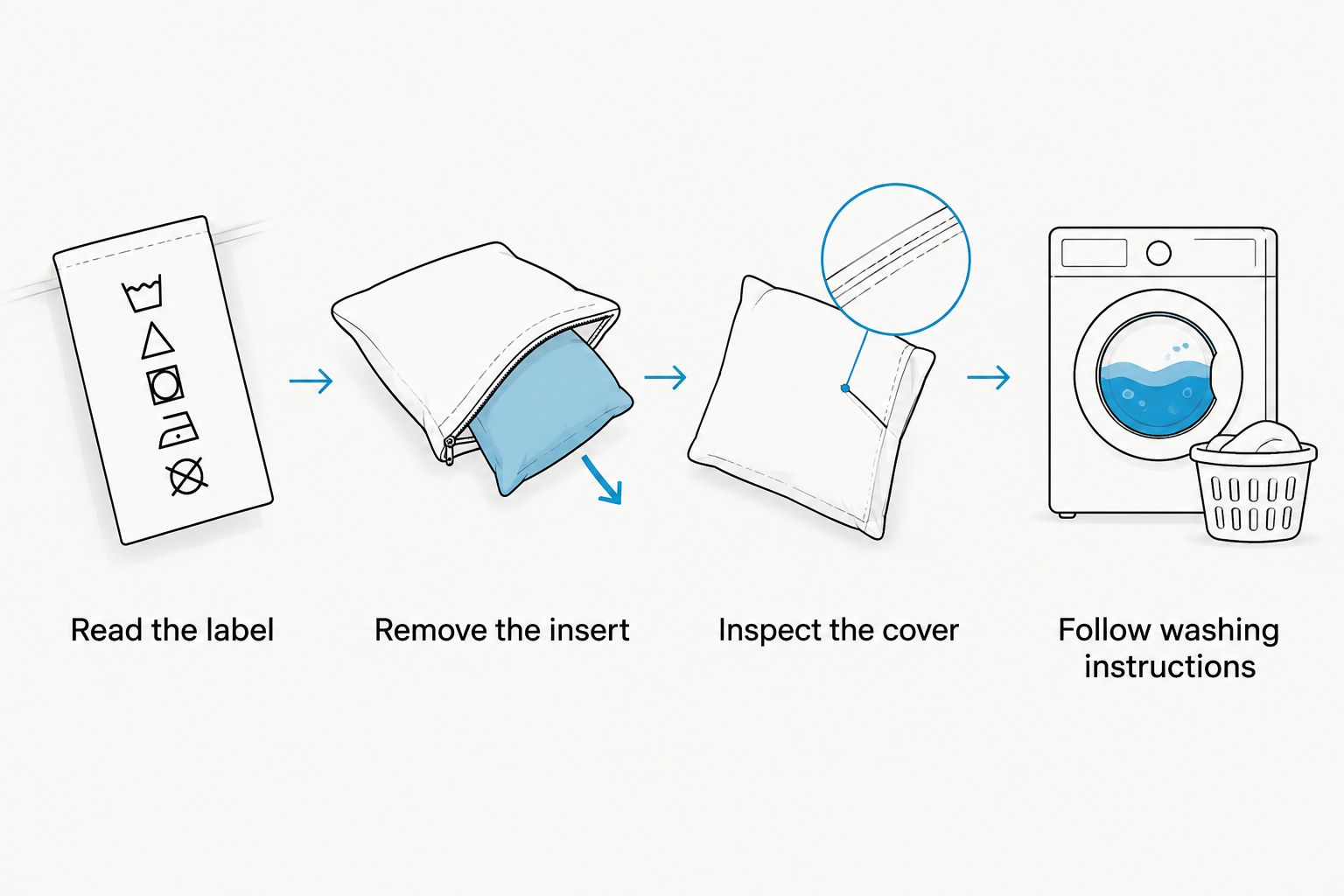
Use this sequence before putting a decorative cover in your washer:
- Read the care label. Find the washing instructions and the separate drying instructions. If the label prohibits washing, do not substitute a gentle cycle.
- Remove the insert. Unzip or unfasten the cover without pulling hard on the opening. Set the insert aside for separate care.
- Inspect the cover. Check seams, the closure, attached decorations, and any damaged areas before washing.
- Prepare it as directed. Follow instructions for stain treatment, turning the cover inside out, or protecting decorative details.
- Use the permitted settings. Select the temperature and cycle specified for that cover, then follow its drying directions.
For your 2026 home-care routine, save the washing instructions somewhere you can find them again. A photo of the label is useful if the tag becomes difficult to read, especially when several similar-looking covers have different requirements.
Why this matters
Decorative pillow covers combine more than fabric. A woven front can have a different backing, a printed design, embroidery, piping, or attached trim. Cleaning must suit the finished item, not just the material that occupies the largest area.
Betterhouse is for shoppers choosing everyday home essentials for real rooms and routines. For decorative pillows, that means checking how an item will be cleaned before deciding where it belongs. A cover used on the main family sofa faces a different routine from one displayed on a rarely used accent chair.
Think about the job you need the pillow to do. If you want to remove a cover and add it to ordinary laundry, verified machine-wash instructions matter more than a familiar fabric name. If appearance takes priority, accepting a more involved cleaning method is a separate choice.
Which cleaning method fits your pillow cover?
Start with the method permitted by the manufacturer. The table below compares cleaning routes, not interchangeable treatments: a method that suits one cover can be unsuitable for another.
| Cleaning method | Best for | Practical advantage | Trade-off or limitation |
|---|---|---|---|
| Machine washing | Covers explicitly labeled machine washable | Cleans the whole cover without washing it by hand | The wrong cycle, temperature, or load can damage fabric or details |
| Hand washing | Covers whose instructions specify or permit hand washing | Gives you direct control over handling | Still wets the whole cover and requires careful drying |
| Spot cleaning | Covers labeled for spot cleaning and suitable localized marks | Targets the affected area without soaking the whole item | Can leave a visible boundary; does not clean the entire cover |
| Professional cleaning | Covers requiring professional care | Lets you discuss fabric, construction, and stains with a cleaner | Requires a separate cleaning arrangement rather than ordinary home laundry |
A delicate cycle is not a replacement for a hand-wash-only instruction. Likewise, spot cleaning is not automatically safe for a cover that requires professional cleaning. Water, detergent, or rubbing can affect the treated area even when the rest of the cover stays dry.
Before choosing a cleaning method in 2026, check the complete instruction rather than stopping at the first familiar word. Washing, bleaching, ironing, and drying symbols each address a different part of care.
How to prepare a machine-washable decorative pillow cover
Separate the cover from the insert
Lay the pillow on a clean surface and open the closure fully. Compress the insert gently as you remove it, supporting the opening instead of dragging the insert against the zipper or seam. Keep any loose filling contained.
Do not assume the insert shares the cover’s washing instructions. Foam, loose fiber filling, and feather-filled inserts have different care needs, and their own labels take priority. A machine-washable outer cover gives you no permission to wash the complete pillow.
Check for damage and loose details
Look along the seams and around the closure. Repair loose stitching before washing when you can do so safely, or set the cover aside for repair. Washing an already damaged cover adds movement to an area that needs attention.
Check decorations separately. Buttons, tassels, fringe, appliqué, and beading deserve a closer look, even on a cover labeled washable. Follow any instructions about protecting those details; do not assume a laundry bag cancels a care restriction.
Deal with stains before washing
Identify the mark as well as you can, then choose a treatment compatible with the label. Blot fresh spills rather than spreading them across the fabric. Avoid aggressive rubbing on textured surfaces, prints, or embroidery.
If the instructions permit a cleaning solution, test it first on an inconspicuous area and let that area dry before judging the result. A test helps reveal color or surface changes, but it does not establish that the entire cover can tolerate soaking or machine washing.
Choose a suitable laundry load
Follow the cover’s directions for cycle, temperature, and detergent. Keep it away from items with exposed hooks or other features that can catch decorative fabric. Do not pack the washer so tightly that items cannot move as intended.
Use a protective laundry bag when the care instructions recommend one. Turning a cover inside out can protect its face from direct contact during washing, but do this only when compatible with the item’s construction and instructions.
How should you dry a decorative pillow cover?
Machine washable does not mean tumble-dryer safe. Read the drying instruction separately, including whether the cover should dry flat, hang dry, or use a permitted dryer setting. Do not choose high heat simply to finish the job faster.
Support the cover in the way its instructions require. If flat drying is specified, spread it evenly on a suitable clean surface and arrange it without stretching. If line drying is allowed, hang it so the attachment points do not pull unnecessarily on delicate areas.
Check the corners, seams, and closure before putting the insert back. These areas can remain damp after the main fabric feels dry. Reassembling a damp pillow traps moisture inside rather than letting the cover finish drying.
When you update your laundry habits in 2026, treat drying as part of cleaning—not a final shortcut. A cover that comes through washing successfully still needs the correct drying method to retain its intended fit and surface.
Why washing instructions vary between decorative pillow covers
Two covers can look alike on a sofa and still require different care. These construction differences explain why a general fabric recommendation cannot replace an item-specific label:
- Fiber composition: Cotton, polyester, wool, silk, and blends respond differently to water, heat, and handling. Fiber content alone still does not determine care.
- Fabric construction: A loose weave, raised pile, or textured surface needs different handling from a smooth, tightly woven surface.
- Color and printing: Dyes and printed designs introduce colorfastness and surface-care considerations that plain fabric does not resolve.
- Decorative details: Embroidery, fringe, buttons, and beading add components that must tolerate the same cleaning process.
- Backing and lining: The front and back can contain different materials, and bonded layers introduce additional care requirements.
- Condition: Worn seams, damaged closures, and loose decorations need attention before cleaning adds further movement.
None of these features automatically means a cover cannot be washed. They mean you need instructions for the whole finished cover. Avoid turning a material-level statement into a promise about an individual item.
What if the pillow cover has no care label?
Do not machine wash an unidentified decorative cover on guesswork. Look for the original product information or ask the seller for the finished item’s care instructions. A fabric-content description is useful, but it is not a complete cleaning direction.
Until you confirm the method, avoid soaking the cover or applying an unverified stain treatment. For a valuable, delicate, or heavily decorated piece, discuss the item with a professional cleaner before attempting home cleaning.
For any decorative pillow you buy from Betterhouse, check the individual product information rather than assuming all home textiles share one care routine. During a 2026 shopping comparison, unresolved care instructions are a reason to ask a question before purchasing—not permission to select a gentle cycle later.
Does a zipper mean the decorative pillow cover is washable?
No—a zipper means the cover opens, not that it is machine washable. The opening lets you separate the cover from the insert, which helps with cleaning, replacement, and fit checks. The permitted cleaning method remains a separate instruction.
Inspect the zipper before laundering a washable cover. If it catches, separates, or pulls away from the seam, address the problem first. Follow the manufacturer’s preparation instructions rather than forcing a damaged closure shut.
Can you wash the pillow insert with its cover?
Wash the insert with the cover only when both items’ instructions explicitly permit the same treatment. Otherwise, separate them and clean each according to its own label. The cover’s instructions do not describe the filling inside it.
Do not wash an insert simply because it fits into the machine. Its material, construction, and drying requirements determine whether that is an appropriate method. If the insert has no usable care information, confirm its requirements before washing.
FAQ
Can decorative pillow covers go in the washing machine?
Yes, decorative pillow covers can go in the washing machine when their care label permits machine washing. Remove the insert and follow the cover’s separate washing and drying instructions.
Can I use a delicate cycle for a hand-wash-only pillow cover?
No, a delicate cycle does not replace a hand-wash-only instruction. Follow the stated method rather than assuming reduced machine agitation makes it equivalent.
Can I put a decorative pillow cover in the dryer?
Use the dryer only when the cover’s drying instructions permit tumble drying. Machine-wash permission does not establish dryer safety.
Should I remove the pillow insert before washing the cover?
Yes, remove the insert before washing a removable decorative cover. Check the insert’s own care instructions if it also needs cleaning.
Can I machine wash a pillow cover with tassels or embroidery?
Machine wash a decorated cover only when its finished-item care instructions allow it. Tassels, embroidery, backing, and closures must all be compatible with the permitted method.
What should I do if my decorative pillow cover has no washing instructions?
Find the original product information or ask the seller before machine washing it. For a delicate or valuable piece, discuss cleaning with a professional cleaner rather than guessing.
What should I check before buying decorative pillows from Betterhouse?
Check each Betterhouse decorative pillow’s care information, dimensions, and whether the item includes a cover, an insert, or both. Choose it only when the verified details fit your room and cleaning routine.
One last thing
Before removing several covers for laundry, photograph each pillow assembled and keep its care information identifiable. Similar covers are easy to mix up once their inserts are out. Matching each dry cover to the correct insert saves you from forcing a tight fit or overlooking a different drying instruction.
For your 2026 pillow-care routine, the most useful upgrade is remembering which instructions belong to which cover. Keep that information with the item, especially when rotating seasonal decorations into storage.