

Yes, kitchen towels can go in the dryer when their care label allows tumble drying; use the heat setting specified for that towel. For your 2026 laundry routine, keep towels with a do-not-tumble-dry label out of the machine, and never use dryer heat to deal with oily residue that remains after washing.
- Can kitchen towels go in the dryer? Yes, when the care label permits tumble drying at the selected heat.
- Betterhouse kitchen towels include printed designs; check each towel’s care instructions rather than assuming all cotton is dryer-safe.
- Air drying avoids dryer heat, but towels need airflow and must dry completely before storage.
- Rewash towels with remaining oil or grease; a longer dryer cycle is not a cleaning step.
Can kitchen towels go in the dryer?
The care label decides whether a kitchen towel belongs in the dryer—not its name, thickness, or appearance. A dish towel and a tea towel can need different treatment even when both contain cotton. Prints, trims, and fabric construction also affect the manufacturer's instructions.
Choose your drying method by the permitted treatment and the routine you want. These options compare drying methods, not guarantees for every towel.
| Drying method | Best for | Main advantage | Main limitation |
|---|---|---|---|
| Tumble drying on low, when permitted | Towels whose labels specify low heat | Machine drying without selecting a hotter setting | Low heat does not override a do-not-tumble-dry instruction |
| Tumble drying at the labeled setting | Towels with explicit machine-drying instructions | A straightforward wash-and-dry routine | Different towels can require separate loads |
| Air drying, when permitted | Towels that prohibit tumble drying or households avoiding dryer heat | Avoids exposure to dryer heat | Needs space, airflow, and a check for damp folds |
If you're choosing towels rather than caring for ones you already own, compare kitchen towels for everyday use with their care requirements in mind. A towel that fits your laundry routine is easier to keep in regular use.
Why this matters
A kitchen towel moves between wet hands, dishes, and countertop spills. Those jobs leave different residues, so drying is only the final part of care—not a substitute for washing.
For 2026 shopping, Betterhouse kitchen towels are best for shoppers who want printed designs for everyday kitchens. Choose the design you enjoy, then confirm that its washing and drying instructions fit your household. A cotton description alone does not establish tumble-dryer permission.
High heat is not a universal shortcut. It can contribute to shrinkage in susceptible fabrics, and heat-sensitive decoration needs its own care instructions. At the other extreme, putting a towel away while its folded edges remain damp creates a storage problem even if the visible surface feels dry.
How do you dry kitchen towels without damaging them?
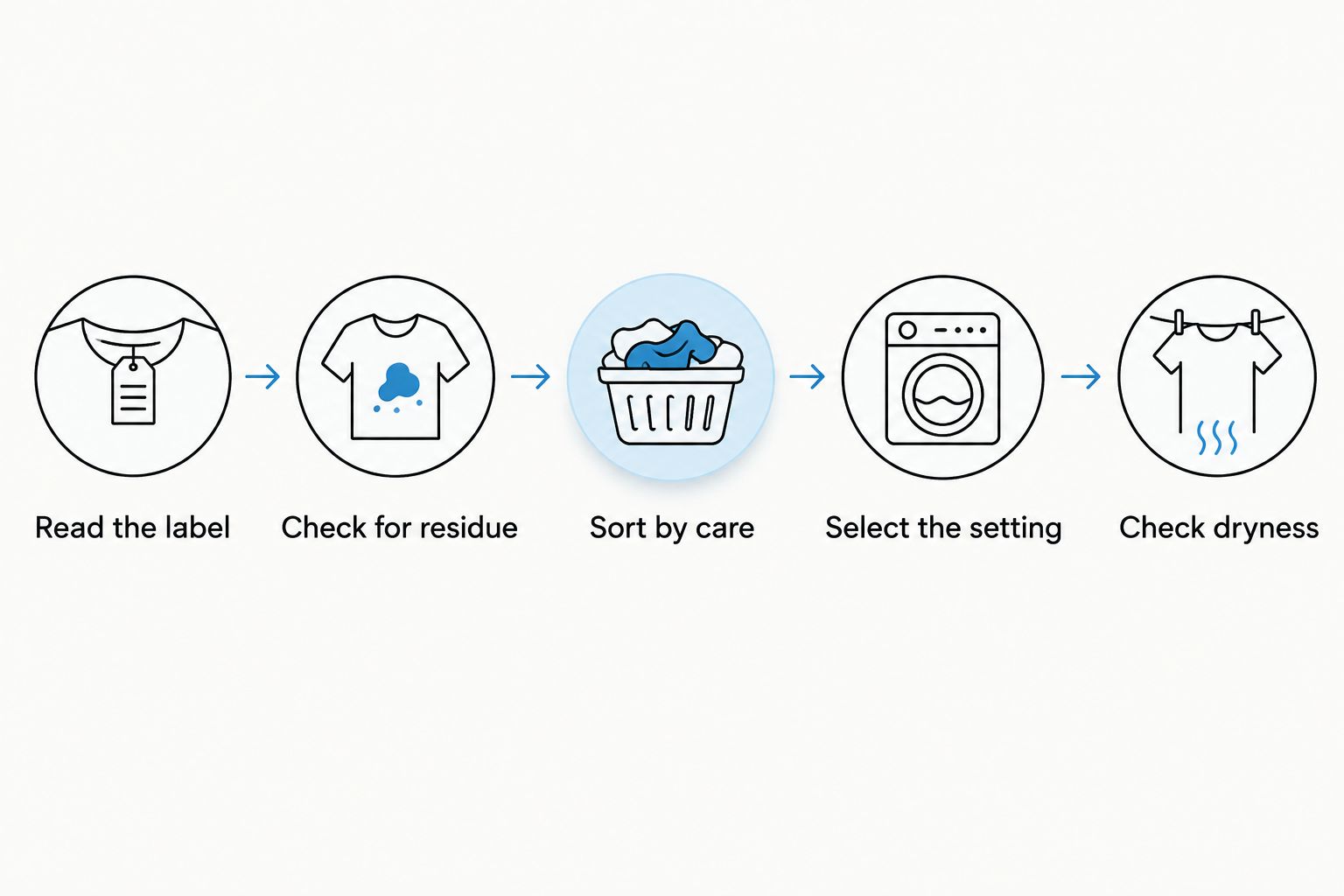
Use this label-first sequence for your 2026 laundry routine. It separates three decisions that often get mixed together: whether the towel is clean, whether tumble drying is allowed, and whether the towel is completely dry.
- Read the label. Find the drying instruction before selecting a cycle. Written instructions take priority over a guess based on fiber content.
- Check for residue. Inspect washed towels for remaining oil, grease, or cleaning-product residue. Follow the relevant cleaning and appliance safety instructions before exposing them to heat.
- Sort by care. Group towels with compatible drying instructions. Set aside anything that prohibits tumble drying.
- Select the setting. Use the permitted temperature and follow your dryer manual for loading. Do not crowd the drum or choose extra heat just because the load is heavy.
- Check dryness. After drying, feel the hems, corners, and thicker sections. Finish drying anything damp before folding it into a stack.
When a dryer stops before every towel is dry, check the load rather than immediately raising the temperature. Different fabrics and folded or tangled areas do not dry identically. Separate damp pieces and continue only with a treatment their labels permit.
Clean the lint filter as your appliance manual directs. Towels shed lint, and dryer maintenance belongs in the routine just as much as sorting the laundry.
How do you read a tumble-drying symbol?
A square containing a circle is the tumble-drying symbol. A crossed-out version means do not tumble dry; dots inside the circle indicate the permitted heat level under the applicable care-label system.
Read the whole label, including any written instructions. Do not confuse a washing-temperature instruction with a drying-temperature instruction. If a symbol is unclear, consult the manufacturer's care guide rather than interpreting it from memory.
What if the kitchen towel has no care label?
Do not assume an unlabeled towel is dryer-safe. Look for the manufacturer's care instructions on packaging or the product information you received with it. If you cannot establish permission to tumble dry, avoid dryer heat and use a suitable air-drying method.
A familiar-looking weave is not enough evidence. An unlabeled printed towel can look like a plain cotton towel while carrying decoration that needs different care.
Cotton kitchen towels: follow the finished towel's instructions
Cotton kitchen towels can be tumble-dried when their labels permit it. The important distinction is between a fiber's general characteristics and the care requirements of a finished item.
Cotton fabrics can shrink, especially when their construction or finishing leaves them susceptible to dimensional change. Do not promise yourself that a towel will retain its original size simply because it says cotton. Follow the label and avoid unnecessary drying after the towel is already dry.
Best for: shoppers who want cotton towels and can follow their specific care instructions. The trade-off is that cotton content does not establish shrink resistance, print durability, or a particular dryer setting.
Printed kitchen towels: check decoration as well as fabric
Printed kitchen towels need care instructions that cover both the fabric and the design. A printed phrase, decorative border, or applied detail is a reason to check the label carefully—not proof that the towel must be air-dried.
Do not transfer instructions from a plain towel to a decorated one. Likewise, do not assume every printed towel needs identical treatment. The manufacturer's directions are the useful distinction.
Best for: kitchens where you want a useful towel with a visible design. The limitation is that verified fiber content alone does not tell you how that design responds to washing or dryer heat.
Microfiber and blended kitchen towels: do not copy cotton settings
Microfiber and blended towels need their own drying instructions. Synthetic fibers and mixed constructions do not automatically tolerate the settings you use for cotton laundry.
Check both the drying and laundry-additive directions. Fabric softener can leave deposits that interfere with absorbency, so it is not a default solution for towels that feel stiff. Follow the towel's instructions rather than treating scent or softness as evidence of cleanliness.
Best for: households choosing towels for a specific wiping task and willing to sort by care requirements. The trade-off is a separate set of instructions, especially when your other kitchen towels use different fibers.
Why kitchen towel drying instructions vary
A material name is only part of the answer. These factors explain why towels that share a drawer do not necessarily share a dryer cycle:
- Fiber content: cotton, synthetic fibers, and blends have different responses to heat and moisture.
- Fabric construction: a lightweight cloth and a thicker towel hold and release moisture differently.
- Prints and trims: decoration adds care requirements beyond those of the base fabric.
- Care-label restrictions: the permitted treatment applies to the finished towel, not just its main fiber.
- Residue after washing: remaining oils or cleaning chemicals introduce safety questions that a drying setting cannot resolve.
- Load and airflow: crowded or tangled towels need attention before you assume a hotter cycle is the answer.
Separate the laundry when instructions conflict. You do not need to make every towel follow the same routine just because they all live in the kitchen.
How should you air-dry kitchen towels?
Hang towels open on a rack or line with room for air to circulate. Avoid leaving them bunched over a hook or piled on the counter, where wet folds remain pressed together.
Follow any label instruction about shade or drying position. Turn or reposition a towel if folded areas remain damp, and check the hems before putting it away. Air drying is finished when the whole towel is dry—not when its broad middle panel feels dry.
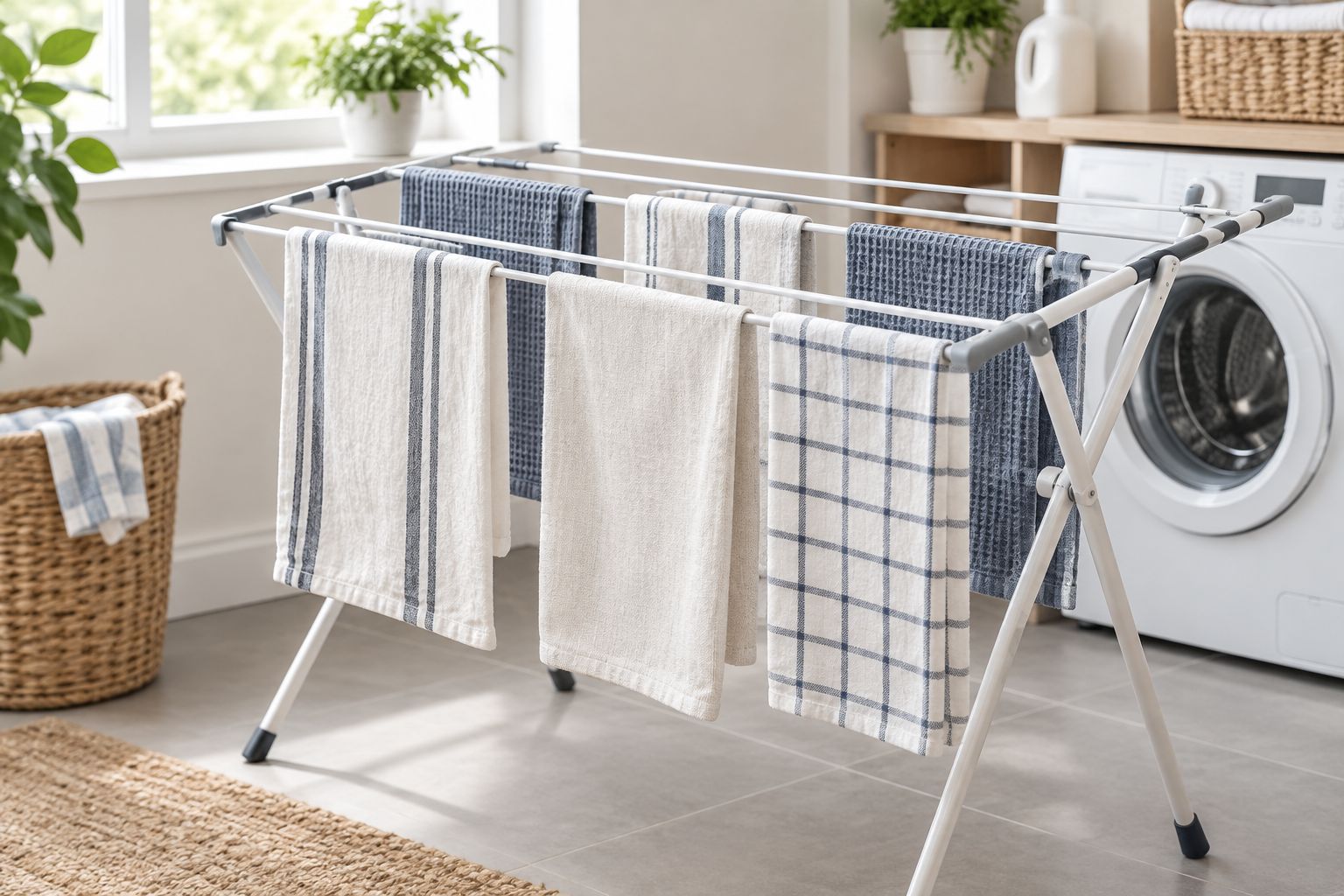
Air drying avoids dryer heat, but it is not a washing treatment or a sanitizing claim. If a towel still smells dirty after washing, address the cleaning problem instead of masking it with a scented laundry product.
What should you check before buying a printed kitchen towel?
For 2026, compare a towel's verified material and dimensions with your actual kitchen tasks, then check its care instructions. Betterhouse lists the cotton flour sack towel below as 100% cotton and 21 inches by 28 inches; the blue cotton towel's listed dimensions are 28 inches by 28 inches.
Those measurements help you picture the cloth at a sink or on a drying rack. They do not establish absorbency rankings or dryer compatibility. Betterhouse's listed materials and dimensions are useful shopping facts, but they are not substitute care instructions.
| Listed towel | Best for | Verified detail | Care limitation |
|---|---|---|---|
| Missy Elliott-inspired Get Your Dry On tea towel | Shoppers wanting a flour sack cotton towel with a musical design | 100% cotton flour sack; 21 inches by 28 inches | Check its label before tumble drying |
| Is It Gay In Here Or Is It Just Me? kitchen towel | Shoppers wanting a square blue cotton towel with a humorous design | Blue cotton; 28 inches by 28 inches | Dimensions and cotton content do not establish a dryer setting |
Consider where you'll use the towel and where it will dry. A larger cloth needs enough rack space to hang open. If you want every towel to go through the same machine cycle, confirm compatible care instructions before choosing by appearance alone.


Can you dry greasy kitchen towels after washing?
Do not put towels with remaining cooking oil or grease into a heated dryer. Oil-contaminated textiles present a fire risk, and washing does not automatically establish that all residue is gone. Follow your dryer manufacturer's warnings and the cleaning instructions for the substance involved.
Avoid treating a stain-free appearance as a safety test. A towel used for a substantial oil spill needs a different assessment from one used to dry clean dishes.
Can you put kitchen towels away slightly damp?
No—finish drying kitchen towels before storing them. Check thick hems and folded corners, then stack only dry towels in a clean, dry space.
A warm towel can still contain moisture. Let it cool enough to assess the fabric rather than judging dryness from warmth alone.
FAQ
Can kitchen towels go in the dryer on high heat?
Kitchen towels can go in the dryer on high heat only when their care instructions permit it. Do not select high heat simply because the towel contains cotton.
Can cotton tea towels go in the tumble dryer?
Cotton tea towels can go in the tumble dryer when their care labels allow it. Follow the specified setting, including any instructions for prints or trims.
Is air drying better than tumble drying kitchen towels?
Air drying is the right choice when a towel's label prohibits tumble drying. For towels that permit both methods, choose based on your routine and available drying space, and finish drying before storage.
Will kitchen towels shrink in the dryer?
Kitchen towels can shrink in the dryer, depending on their fabric and finishing. Follow the label and avoid unnecessary heat or continued drying after the towel is dry.
How long should kitchen towels stay in the dryer?
There is no single drying time for every kitchen towel. Use the permitted cycle and check the hems, corners, and thicker areas for remaining moisture.
Can I use fabric softener on kitchen towels?
Follow the towel's care instructions before using fabric softener. Softener can leave deposits that interfere with absorbency, so it is not a default towel-care step.
Are Betterhouse cotton kitchen towels automatically dryer-safe?
Betterhouse cotton kitchen towels are not automatically dryer-safe based on cotton content alone. Read the care instructions for the individual towel before choosing a drying method.
One last thing
For your 2026 routine, check the hems, not just the center of the towel. A cloth can feel dry across its broad surface while folded or thicker areas still hold moisture. That final check matters whether you use a dryer or a rack.