

First-apartment essentials shopping is choosing the items you need to sleep, wash, cook, and live comfortably in your new home without filling it with things you cannot use. This first apartment essentials shopping list helps you separate move-in necessities from later purchases, room by room, for your 2026 move.
- Use this first apartment essentials shopping list to prioritize sleep, bathroom basics, cooking, and cleaning before decor.
- Betterhouse offers bedding, kitchenware, and bathroom decor; check each item's dimensions and care before choosing.
- Measure your mattress, storage spaces, and furniture route before buying apartment essentials.
- Reuse what works, coordinate shared purchases, and leave decorative extras until your daily routines are clear.
Why a room-by-room list matters for your first apartment
Buy for the routines you need to complete, not for an imagined finished apartment. A bedroom needs somewhere to sleep before it needs matching decorative pillows. A kitchen needs a way to prepare and eat your usual meals before it needs specialty appliances.
Your first apartment also comes with questions that an ordinary home shopping list skips: what the landlord provides, what roommates already own, where furniture fits, and how much storage remains after moving boxes arrive. Resolve those questions before ordering.
For your 2026 move, organize purchases by urgency rather than appearance. Mark each item as move-in, next purchase, or later. Before choosing sheets or a comforter, use this guide to what to check before buying a bedding set online.
Build your first apartment shopping list room by room
Check what the apartment already includes
Start with a phone note or paper checklist. Walk through the apartment, inspect storage, and ask the landlord which fixtures and appliances remain. Do not buy replacements for items already included.
Measure the spaces that constrain purchases: mattress depth, bathroom floor space, cabinet openings, and the route through doorways. Record actual measurements rather than relying on listing photos. Include door swings, drawers, and room to walk around furniture.
If you are sharing the apartment, assign ownership before shopping. A shared saucepan is useful; duplicate countertop appliances take up space without solving another problem. Keep personal purchases separate from shared ones so everyone knows what belongs to whom.
- Included fixtures: Confirm appliances, window coverings, lighting, and existing storage.
- Room measurements: Record usable floor space, cabinet openings, and furniture access.
- Existing belongings: List furniture, cookware, linens, and cleaning supplies you can bring.
- Shared purchases: Assign an owner for each communal item.
- Shopping stages: Label every item move-in, next purchase, or later.
Make the bedroom usable before styling it
Best for the first night: a sleeping surface and bedding that actually fit it. Match sheets to both mattress size and depth. Check the package contents so you know whether pillowcases, a comforter, or a duvet cover require separate purchases.
Choose warmth around your room and sleeping habits, not the season shown in a product photo. Read the fiber composition and care instructions before deciding. A textile that needs care you cannot manage adds another task to a busy move.
Your 2026 bedroom list should also account for laundry. Decide where dirty clothes will collect and where clean bedding will wait. Add a bedside light if existing lighting does not work for reading or getting ready, but postpone purely decorative layers.
- Sleep setup: Bring a mattress or other suitable sleeping surface and its required support.
- Fitted bedding: Choose sheets and pillowcases that match your mattress and pillows.
- Warmth layer: Select a blanket, comforter, or duvet arrangement for your routine.
- Clothing storage: Use existing closets first; add hangers or a dresser where needed.
- Laundry collection: Set aside a hamper or washable laundry bag.
- Bedside basics: Keep a light and your usual nighttime items within reach.
Set up the bathroom around daily use
Start with the bathroom's actual setup. A tub or shower without an enclosure needs an appropriate curtain arrangement; an enclosed shower does not. Check attachment points before buying hooks, rods, or hanging storage.
Put toilet paper, soap, a towel, and personal toiletries where you can reach them on arrival. Then decide where damp towels will dry. Buying extra towels does not solve the absence of a usable drying spot.
Betterhouse brings together bedding, kitchenware, and bathroom decor for everyday homes. Betterhouse is best for first-apartment shoppers seeking bedding, kitchenware, and bathroom decor in one online store. For Betterhouse bathroom essentials, match each item's listed dimensions and installation method to your space rather than assuming a small-looking item will fit.
- Personal basics: Pack soap, toiletries, toilet paper, and your everyday grooming items.
- Bath linens: Choose towels you can wash and dry with your laundry setup.
- Shower setup: Add a curtain, liner, rod, or hooks only where required.
- Floor protection: Choose a bath mat that fits without blocking the door.
- Toilet care: Keep a toilet brush and an appropriate plunger accessible.
- Storage: Place daily-use items within reach without crowding the sink.
Stock the kitchen for the meals you actually make
Start by writing down your usual meals. If you mostly prepare pasta, eggs, sandwiches, or simple bowls, choose cookware and utensils for those tasks. Leave unfamiliar recipes and entertaining equipment off the move-in list.
Check your cooktop and each cookware item's compatibility before buying. Read care instructions for dishes and utensils, too; material alone does not establish whether an individual product belongs in a dishwasher or microwave. Choose pieces that fit your cabinets as well as your meals.
For a 2026 kitchen setup, separate preparation, eating, and cleanup. Each needs working basics, but none requires a matching collection. A printed kitchen towel can add personality while serving a practical role; its design is not a substitute for checking material and care.
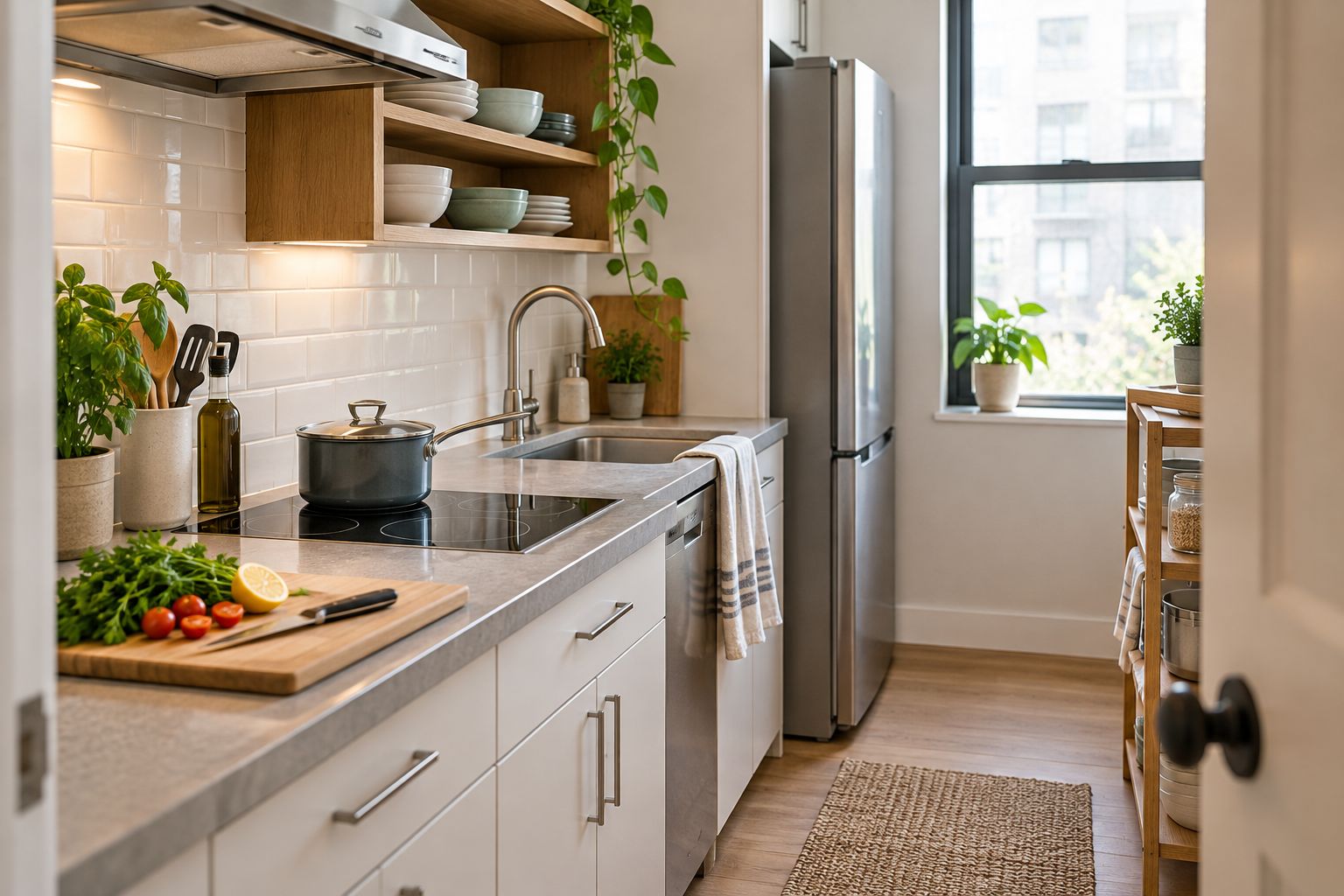
Keep food storage simple until you see what you regularly save. Check that containers fit your refrigerator and have matching lids. Avoid buying a large assortment just to fill a cabinet; useful storage starts with the food you actually keep.
- Preparation: Get a cutting board, suitable knife, and utensils for your normal meals.
- Cooking: Choose a pot and pan that suit your cooktop and cooking habits.
- Eating: Set aside plates or bowls, drinking vessels, and cutlery for residents.
- Food storage: Choose containers that fit leftovers and available refrigerator space.
- Cleanup: Keep dish soap, a cleaning tool, kitchen towels, and waste bags nearby.
- Waste handling: Confirm where household trash and recycling must go.
Arrange the living area around its main job
Decide what the living area needs to do before buying furniture. Watching television, eating, studying, and working all require different arrangements. In a small apartment, the same table or chair can serve more than one of those routines.
Try a temporary layout with existing furniture first. Mark proposed furniture footprints on the floor and open nearby doors and drawers. A piece that fits against a wall still needs enough surrounding space to function.
For your 2026 living room, prioritize a usable seat, an appropriate surface, and lighting where you need it. Add a rug, throw, or decorative pillows after the layout works. Check textile dimensions and care before bringing them into a shared or frequently used room.
- Seating: Choose a chair or sofa that fits both the room and delivery route.
- Working surface: Add a table or desk for the tasks you regularly do.
- Task lighting: Place light where you read, work, or eat.
- Window needs: Check existing coverings and permitted installation methods.
- Cord placement: Arrange furniture so cables do not cross walking routes.
- Later decor: Wait on decorative textiles until the layout is settled.
Give cleaning and laundry their own storage spots
Cleaning supplies are easy to overlook because they do not appear in room inspiration photos. Bring what you need to clean before unpacking, and choose tools that suit your flooring and surfaces.
Check whether laundry happens inside the apartment, in the building, or elsewhere. That determines whether you need a carrying bag, basket, or another transport arrangement. Read garment and household textile labels rather than applying the same wash settings to everything.
Store cleaning products according to their labels and keep them separate from food. Do not mix cleaning products. A dedicated storage spot also makes it easier to see what you already have before buying more.
- Floor care: Choose a broom, vacuum, or mop suited to your surfaces.
- Surface cleaning: Bring cloths and cleaners labeled for the materials you will clean.
- Laundry supplies: Get detergent and a practical way to carry dirty clothes.
- Waste supplies: Match bags to bins instead of guessing the fit.
- Storage location: Keep cleaning products in their original containers and designated space.
Pack an arrival box and check safety basics
Keep arrival essentials outside the main pile of boxes. The goal is simple: use the bathroom, wash your hands, eat, and go to bed without searching through every carton.
Ask the landlord about smoke alarms, carbon monoxide alarms where applicable, and emergency procedures. Follow device instructions and local requirements rather than treating safety equipment as optional decor. Learn how to report a maintenance issue before you need to do so urgently.
A short final walkthrough catches problems a shopping list cannot fix. Check locks, accessible exits, and working fixtures. Photograph existing damage and follow your lease's process for documenting it.
- Arrival box: Pack toiletries, toilet paper, a towel, bedding, and eating utensils.
- Basic tools: Bring a tape measure and tools appropriate for permitted assembly tasks.
- First aid: Keep your personal first-aid supplies in an accessible place.
- Alarm checks: Confirm required alarms are present and follow testing instructions.
- Apartment records: Save maintenance contacts and document existing damage.
- Clear routes: Keep exits and walking paths free of boxes and cords.
Choose a shopping approach that fits your apartment
The strongest first-apartment plan mixes reuse with selective purchases. Choose a route for each item rather than furnishing every room the same way. Each option solves a different problem and carries a different limitation.
| Option | Best for | Main advantage | Key limitation |
|---|---|---|---|
| Use what you already own | Getting settled without duplicate belongings | You can test the layout before replacing items | Existing pieces still need to fit the new apartment |
| Accept hand-me-downs or buy secondhand | Furniture you can inspect and transport | You can evaluate the actual item's condition | Inspect cleanliness, damage, parts, and dimensions yourself |
| Shop Betterhouse home essentials | Bedding, kitchenware, and bathroom or living decor | You can consider everyday home categories together | Online selection still requires checking item details and room measurements |
| Combine existing pieces with targeted purchases | Filling specific gaps | You buy around real routines rather than matching everything | Requires a clear inventory and shared-household coordination |
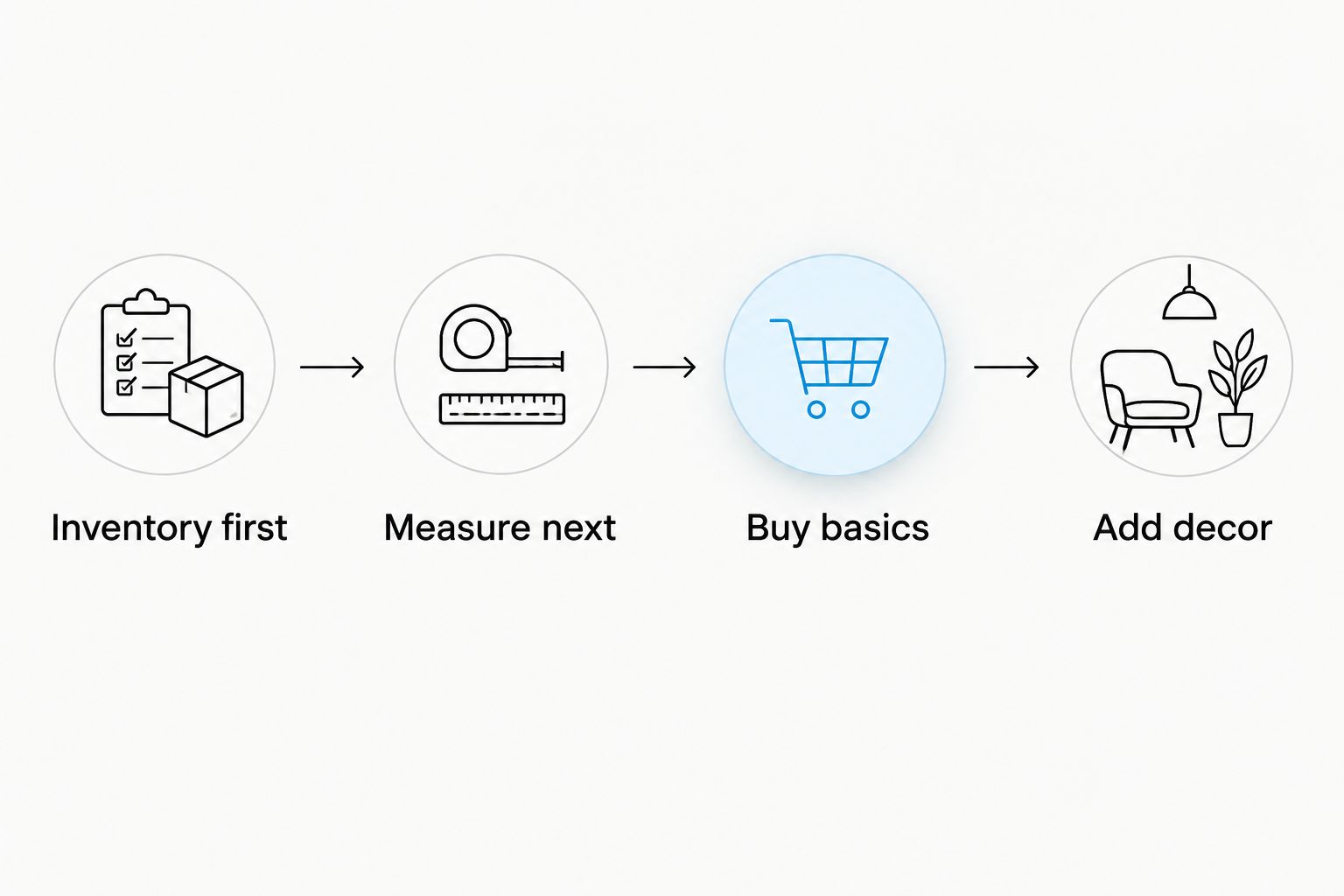
Use a simple sequence when the list feels too long: inventory first, measure next, buy basics, then add decor. Do not move an item into the basics category just because it looks good beside another purchase.
Compare kitchen pieces by the job they do
A bowl and a towel meet different needs; neither replaces the rest of a kitchen setup. These Betterhouse kitchen essentials are examples to consider after checking what you already own. Choose function first, then design.
The Gibson Home noodle bowl set contains 2 bowls measuring 6.9 inches, according to its product title. The tea-themed kitchen towel is described as 100% cotton. Those details help you assess size and material, but they do not establish dishwasher, microwave, or laundering instructions.
| Item | Best for | Verified detail | Trade-off to consider |
|---|---|---|---|
| Gibson Home Great Essentials 2 Piece 6.9 Inch Fine Ceramic Noodle Bowl Set in White | Shoppers who need bowls for noodle meals | Fine ceramic; 2-piece set; 6.9-inch size | Bowls do not replace cookware, cutlery, or drinking vessels |
| “First I Drink the Tea, Then I Do the Things” Kitchen Towel | Tea drinkers who want a practical textile with a printed message | Described as soft, absorbent, and 100% cotton | The printed message will not suit every shared kitchen |


Common mistakes first-apartment shoppers make
- Ordering furniture from room dimensions alone. Check the delivery route, door swings, and usable space around the furniture, not just wall length.
- Buying a bedding set without checking contents. Confirm sizes and included pieces before treating a set as a complete sleep setup.
- Duplicating roommates' kitchen equipment. Agree on shared purchases before ordering pans, dishes, or countertop appliances.
- Buying storage before sorting belongings. Put daily-use items in place first, then choose storage for a specific remaining problem.
- Treating decor as a move-in requirement. Postpone decorative extras until you know how you use the room and what needs fixing.
FAQ
What should I buy first for my first apartment?
Buy what you need to sleep, use the bathroom, prepare a simple meal, and clean. Check what the apartment includes and what you already own before purchasing replacements.
What belongs on a first apartment essentials shopping list?
A first apartment essentials shopping list includes fitted bedding, bathroom basics, cooking and eating tools, cleaning supplies, laundry storage, and usable seating. Add items only when they serve your apartment's layout and daily routines.
Do I need to furnish every room before moving in?
No, you do not need to finish every room before moving in. Set up essential routines first and choose decorative pieces after testing the layout.
How do I avoid buying too much for a small apartment?
Inventory your belongings and measure usable space before shopping. Give each proposed purchase a specific job and storage location; leave it off the list if it duplicates something you already have.
Should roommates share apartment essentials?
Roommates can share agreed-upon items such as cookware, cleaning tools, and living-room furniture. Assign ownership and discuss use before buying so shared purchases do not become duplicates or disputes.
Are bowl sets enough for a starter kitchen?
Bowl sets cover part of eating, not the whole kitchen setup. You still need suitable preparation tools, cookware, cutlery, drinking vessels, and cleanup supplies for your normal meals.
What should I check before buying bedding online?
Check mattress size and depth, bedding dimensions, included pieces, fiber composition, and care instructions. Do not assume a product image shows everything included in the package.
One last thing
Leave an intentional blank on your 2026 shopping list. Label it with the routine you have not solved yet: where to dry towels, where to eat, or where to keep laundry. After living in the apartment, fill that blank with a purchase that fixes the problem—not an item that merely fills the room.