

A bathroom shelf can hold the load stated in its manufacturer's instructions, provided you install it on the specified surface with the specified fixings; there is no single weight limit for all bathroom shelves in 2026. That limit also depends on whether the rating applies to each shelf or the whole unit. Include baskets, containers, and their contents in the load—not just the toiletries inside them.
- How much weight can a bathroom shelf hold? Follow the manufacturer's rating for the complete installed shelf.
- Bathroom shelf weight capacity depends on the shelf, its supports, wall fixings, and installation surface.
- Betterhouse bathroom storage dimensions help you check fit; dimensions alone do not establish a safe load.
- Count baskets and full bottles in the total load, and follow the specified weight distribution.
How much weight can a bathroom shelf hold?
Use the rating for the complete shelf system, not a generic estimate based on its appearance. A thick board does not establish the strength of its brackets, and a strong bracket does not establish the strength of its connection to the wall. The relevant limit is the one documented for your shelf and installation.
Before buying, check both capacity and placement. This guide to choosing a bathroom shelf before you buy covers the broader shopping decision; the checks below focus on keeping the load within the shelf's documented limits.
| Shelf option | Best for | Useful feature | Main limitation | Capacity check |
|---|---|---|---|---|
| Bracket-mounted wall shelf | Storage where suitable wall fixing is possible | Keeps the floor clear | Depends on the wall connection as well as the shelf | Confirm the complete assembly's rating and required fixings |
| Floating wall shelf | A compact wall-storage layout | Conceals its supports | Hidden hardware still needs a suitable wall connection | Check the shelf system's instructions, not just the board |
| Adhesive-mounted shelf | A no-drill setup permitted by its instructions | Avoids drilling | Surface preparation and adhesive compatibility matter | Confirm the permitted surface, load, and installation procedure |
| Freestanding shelving | Storage where wall mounting is unsuitable | Transfers the stored load through its frame to the floor | Needs floor space and any specified anti-tip measures | Check each tier's rating and the unit's total limit |
These options solve different installation problems. None automatically earns a higher weight allowance because it looks substantial, uses metal, or has several tiers.
Why this matters
Bathroom storage changes during ordinary use. A shelf that holds partly empty bottles today can receive full replacements tomorrow, and a decorative basket adds weight before you put anything inside it. Plan around the items you actually intend to keep there.
A load rating also describes storage, not a grab handle or step. Never use a bathroom shelf to steady yourself, support your body, or help you reach another shelf. Pulling on the front edge creates a different loading condition from placing the specified contents on its surface.
The practical goal is simple: keep daily essentials accessible without treating appearance as proof of strength. Your installation instructions should settle the capacity question before the shelf becomes part of your routine.
How do you check a bathroom shelf's weight limit?
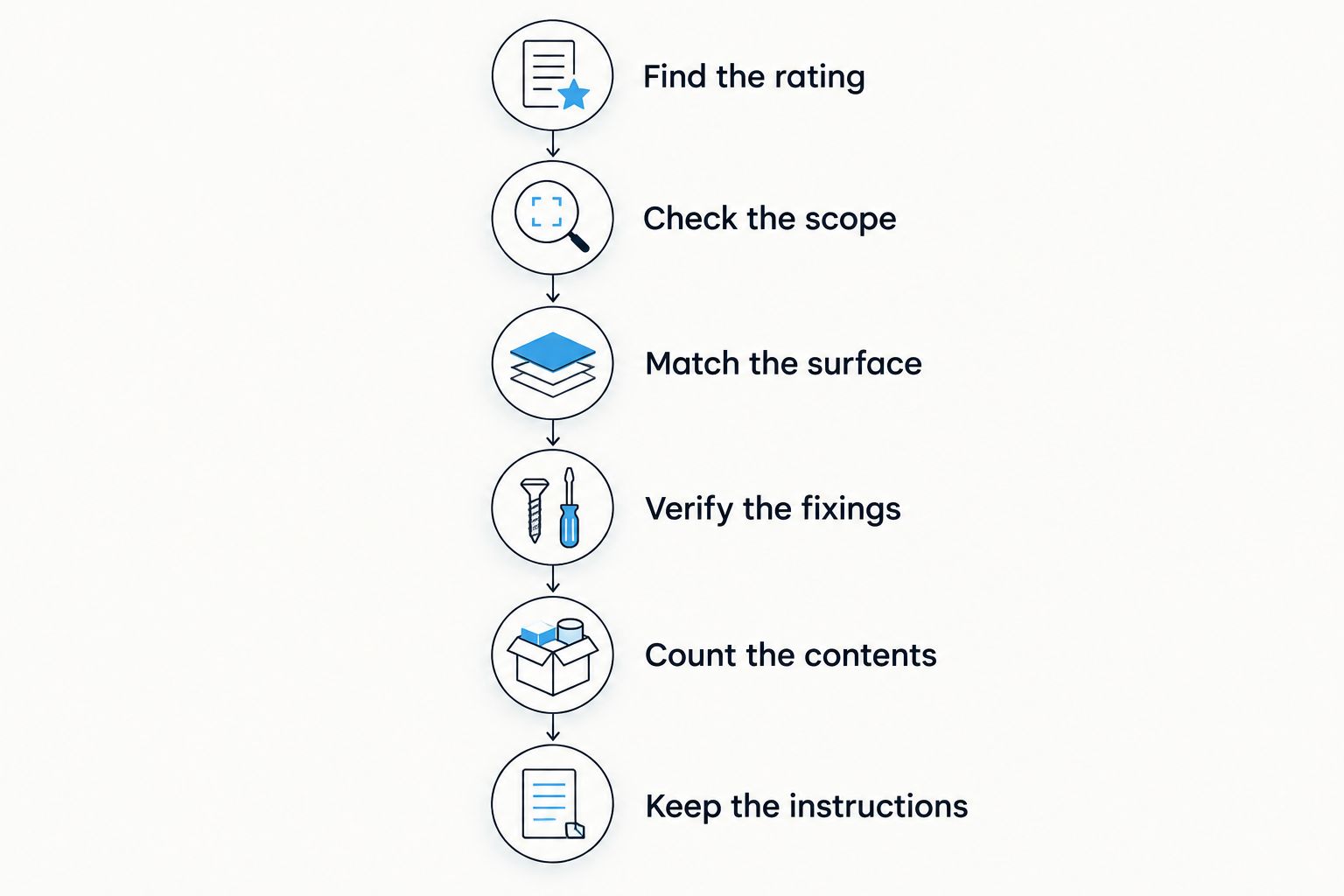
Use this sequence when choosing or installing a bathroom shelf in 2026. Each check answers a different question; a suitable board cannot compensate for unsuitable mounting hardware.
- Find the rating. Read the product instructions, packaging, or manufacturer's specifications. Look for a stated maximum load rather than a photograph showing heavy-looking objects.
- Check the scope. Establish whether the limit applies to one shelf, one bracket, each tier, or the complete unit. Do not multiply a component rating to create a new shelf rating.
- Match the surface. Confirm the installation instructions cover your actual wall or mounting surface. Tile, drywall, masonry, and timber require different fixing arrangements.
- Verify the fixings. Use the specified brackets, screws, anchors, or adhesive system. If you change a component, obtain confirmation that the revised assembly meets the required load.
- Count the contents. Include containers, organizers, full bottles, and any other stored objects. Follow the manufacturer's instructions about spacing and weight distribution.
- Keep the instructions. Save the model information and installation guidance so you can check the limit when you change what the shelf holds.
If you cannot find a documented capacity, ask the manufacturer or seller before using the shelf for your planned load. A description such as sturdy, heavy-duty, or suitable for bathrooms is not a numerical load rating. Neither is a customer photo.
Wall-mounted shelves: check the complete connection
A wall-mounted shelf needs a rating that matches its mounting arrangement. The board, supports, fasteners, and wall connection work together. Checking only one of those parts leaves the rest of the installation unresolved.
For a bracket shelf, confirm the specified bracket placement and screw arrangement. For a floating shelf, check the concealed support's installation instructions. Do not assume a floating shelf uses the same fixing method as a visibly bracketed one.
Bathroom walls also conceal plumbing and electrical services. Identify the wall construction and check for hidden services before drilling; use a qualified installer when you cannot establish a suitable fixing location. Moving the shelf to a convenient position does not make that position suitable for its required hardware.
After installation, keep heavy containers in the locations permitted by the instructions. A rating for an evenly distributed load does not mean you can concentrate the entire allowance at the front corner. Avoid adding hanging storage unless the shelf system specifically allows it.
Adhesive-mounted shelves: surface compatibility comes first
Adhesive-mounted shelves are best for no-drill storage only when the product instructions allow the intended surface and bathroom location. Their practical advantage is avoiding holes. Their limitation is dependence on the adhesive system and the surface underneath it.
Check the cleaning method, preparation procedure, and required waiting period before loading. Follow the product's own directions rather than borrowing instructions from another adhesive shelf. Different mounting systems are not interchangeable.
A tile finish alone does not confirm suitability. Surface texture, coatings, joints, and the adhesive's stated moisture-use conditions all belong in the decision. Do not place adhesive partly across a grout joint unless the instructions permit that arrangement.
Do not treat a successful first day as proof of capacity. Load only within the documented limit and check the mounting condition during normal cleaning. If an adhesive pad lifts or the shelf shifts, remove the contents and resolve the mounting problem before using it again.
Freestanding shelves: check tier limits and stability
Freestanding bathroom shelving is best for rooms where suitable wall mounting is unavailable and floor space permits a unit. It avoids transferring the shelf load through wall brackets, but it still needs a documented capacity and correct assembly.
Read both the per-tier limit and the total unit limit when both are given. An unused upper tier does not automatically allow you to exceed the lower tier's rating. Likewise, a total capacity does not explain how that load must be distributed.
Follow the assembly instructions for leveling, stacking, and anti-tip restraints. Place the unit where it does not obstruct a door, shower entry, or walking route. Tall bottles should remain accessible without requiring you to pull on the frame.
A freestanding unit is not automatically suitable for direct shower spray. Check its stated location and care requirements separately from its weight rating. Capacity and moisture suitability answer different questions.
Why bathroom shelf weight capacity varies
These factors explain why you cannot assign the same load limit to every bathroom shelf:
- Shelf construction: Material, thickness, joints, and the way the shelf is made affect how it carries a load. A material name alone does not establish capacity.
- Shelf span: The distance between supports changes how a shelf bends under weight. Overall width is not a substitute for the required support arrangement.
- Mounting system: Brackets, concealed supports, adhesive mounts, and freestanding frames transfer loads differently. Use the rating for the system you have.
- Supporting surface: Wall fixings need a compatible substrate. A fixing's rating under one installation condition does not establish its rating under another.
- Load placement: An evenly spread load differs from a heavy object at an unsupported edge. Follow any distribution conditions attached to the stated limit.
- Condition and exposure: Loose connections, corrosion, damaged material, or lifting adhesive need attention. Bathroom suitability does not remove the need for inspection and care.
Do not turn these factors into an improvised weight calculation. They explain what to verify; they do not supply a missing manufacturer's rating.
What should you count when weighing bathroom storage?
Count the entire stored assembly. If you use a basket, weigh the basket with everything inside it. If you use separate containers, include their lids and contents rather than weighing only the products you pour into them.
Weigh bottles at the fullness you expect to store. The volume printed on a bottle is not the total weight of the bottle, cap, pump, and contents, and different liquids do not necessarily weigh the same for a given volume. A household scale gives you a more useful measurement than estimating by eye.
Keep the measurement units consistent with the shelf's instructions. Do not confuse fluid ounces, which describe volume, with ounces used to measure weight. If the manufacturer specifies pounds or kilograms, compare the measured load in that unit.
Leave room in your storage plan for changes without exceeding the rating. Recheck the total when you add an organizer or replace small bottles with larger ones; the shelf does not gain capacity because the new arrangement fits neatly.
Check fit separately from strength when shopping in 2026
Betterhouse is best for everyday home shoppers choosing practical bathroom storage by fit and use. For Betterhouse bathroom storage, treat verified dimensions as a fit check—not evidence of weight capacity.
Two relevant pieces illustrate that distinction. Wooden Coat Hooks with Shelf has overall dimensions of 17 inches wide, 13 inches tall, and 4.75 inches deep; its shelf measures 15.25 inches long by 4 inches deep. Bathroom Storage Wood Box is made of solid pine and measures 19.5 inches long, 3 inches tall, and 7 inches wide overall.
| Piece | Best for | What the dimensions tell you | Trade-off |
|---|---|---|---|
| Wooden Coat Hooks with Shelf | Checking a compact wall-storage arrangement | The shelf offers a 15.25-inch-long, 4-inch-deep surface | Size does not establish the shelf or hook load limit |
| Bathroom Storage Wood Box | Grouping items on a suitable supporting surface | Its overall footprint is 19.5 inches long by 7 inches wide | The box and its contents both count toward the supporting shelf's load |
The box's 7-inch overall width exceeds the shelf's 4-inch depth, so these measurements do not establish a fully supported box-and-shelf pairing. Check each item's intended use separately instead of combining them because both belong to a storage plan.


Neither product's dimensions supply a verified load allowance. Confirm capacity and installation requirements before assigning heavy toiletries or other substantial contents to a storage setup.
Can you add together the weight ratings of wall anchors?
No. Adding individual anchor ratings does not establish the capacity of the complete shelf. The rating conditions, wall material, spacing, brackets, and load direction must all match the intended installation.
Use an approved shelf-and-fixing arrangement rather than a total calculated from hardware packaging. Ask the manufacturer or a qualified installer when the instructions do not cover your wall.
Is a metal bathroom shelf stronger than a wooden one?
Material alone does not tell you which bathroom shelf holds more weight. Construction, dimensions, supports, and mounting conditions determine the useful comparison.
Choose between metal and wood using verified capacity and care requirements. A bathroom shelf's finish and moisture suitability matter, but they do not replace its load rating.
What if your bathroom shelf starts sagging or moving?
Unload it and stop using it until the cause is corrected. Do not add another bracket, extra adhesive, or different screws and assume the original rating still applies.
During your 2026 bathroom storage check, look for loose supports, lifting adhesive, cracks, corrosion, or visible deformation. Repair or replace the installation according to its instructions, and get qualified help if the wall connection is uncertain.
FAQ
How much weight can a bathroom shelf hold in 2026?
A bathroom shelf can hold the manufacturer's stated load when installed under the specified conditions. There is no universal weight limit that applies to every shelf or mounting surface.
Does a shelf's weight limit include the basket?
Yes, the stored load includes the basket and everything inside it. Count containers, lids, full bottles, and other objects supported by the shelf.
Can I put full shampoo bottles on an adhesive bathroom shelf?
Only if the complete load and installation meet that shelf's instructions. Check the permitted surface, bathroom exposure conditions, preparation method, and waiting period before loading.
Do floating shelves hold less than bracket shelves?
The shelf type alone does not determine which holds more. Compare documented ratings for the complete systems under their specified mounting conditions.
Can I double the capacity by using more wall anchors?
No, extra anchors do not automatically double a shelf's capacity. Use a fixing arrangement approved for the shelf and wall construction.
Can I use a shoe rack as bathroom shelving?
Only use a shoe rack in a bathroom if its instructions permit that location and intended use. Its tier count or footwear capacity does not establish a toiletries weight limit or moisture suitability.
Do Betterhouse storage dimensions tell me how much weight a shelf holds?
No, Betterhouse storage dimensions tell you about fit, not load capacity. Confirm the relevant manufacturer's capacity and installation requirements before loading a shelf.
Should I test a bathroom shelf by pulling down on it?
No, pulling down on a bathroom shelf does not verify its storage rating. Follow the manufacturer's installation checks and never use the shelf to support your body.
One last thing
The next refill can change the load more than the next decorative item. Keep a simple list of what your shelf holds, and check it when you switch bottle sizes or add an organizer. A tidy arrangement still needs to remain within the documented limit.