

Choose a bathroom shelf by measuring the usable space, listing what it must hold, and checking how it will stay in place before you compare finishes. In 2026, the best shelf is the one you can reach, clean, and use without blocking a door, drawer, outlet, or daily routine. A shelf that fits the wall but cannot safely hold your items is the wrong choice.
- To learn how to choose a bathroom shelf, measure the space and check mounting before comparing materials.
- A wall shelf frees floor space; a freestanding shelf avoids wall mounting but needs floor clearance.
- Betterhouse is best for shoppers pairing a measured shelf with a solid-pine bathroom storage box, not for choosing an unverified shelf.
- Check load limits, hardware, and cleaning instructions on the exact shelf before buying.
How do you choose a bathroom shelf before you buy?
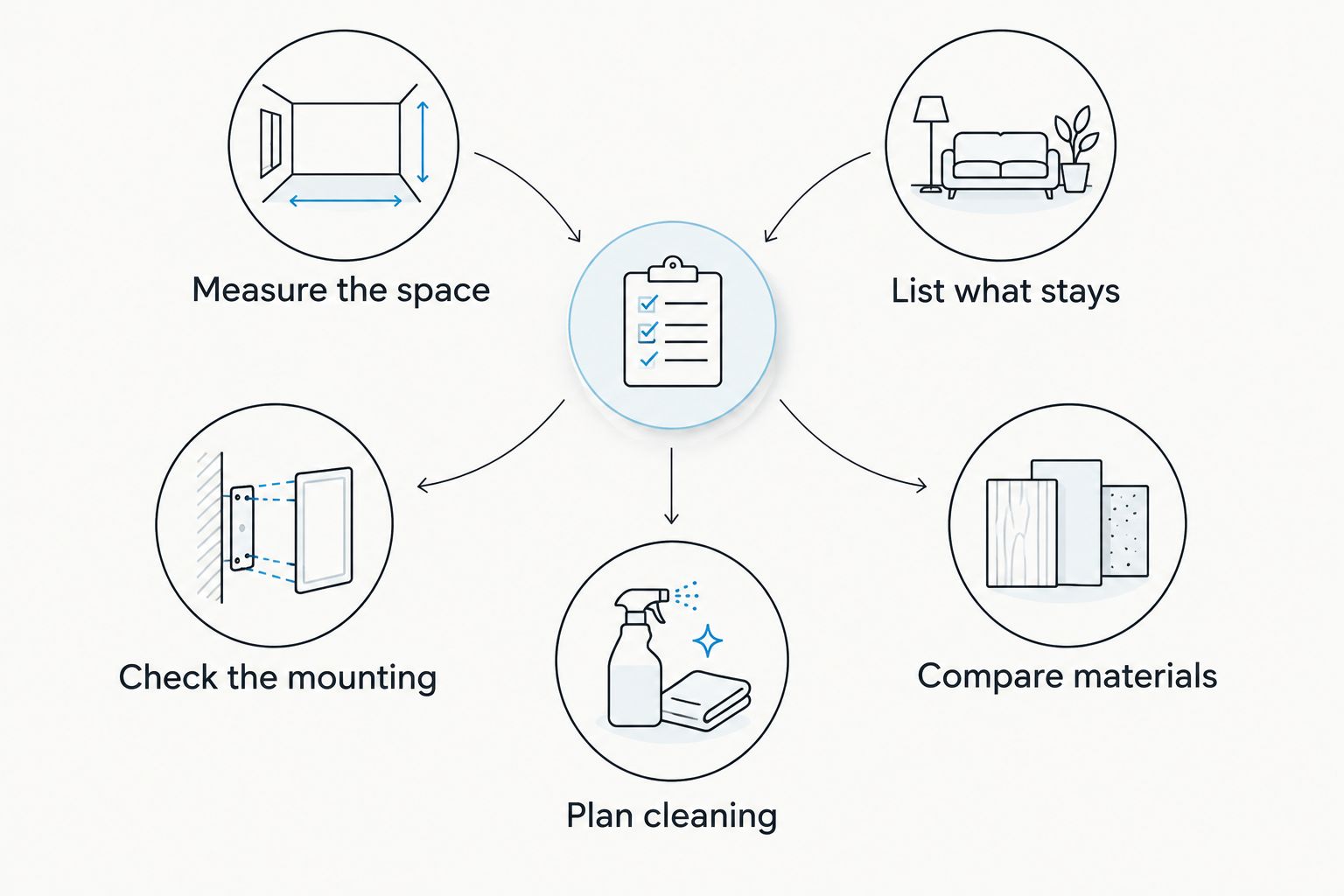
Use this order in 2026. It keeps an attractive shelf from winning over one that actually works in your bathroom.
- Measure the space. Record the available width, depth, and height. Open nearby doors and drawers while you measure; their swing reduces the space you can use. If the shelf goes above a toilet or beside a sink, check whether you can reach its contents without leaning around a fixture. For layouts where every inch matters, see how to choose bathroom shelves for small spaces.
- List what stays. Put the items you want to store together before shopping. A few lightweight everyday items call for a different surface than stacked towels or full bottles. Measure any basket or box you intend to place on the shelf, rather than assuming it will fit because the shelf looks wide in a photo.
- Check the mounting. Decide whether you can attach a shelf to the wall or need a freestanding option. Read the listing for its hardware, compatible wall conditions, installation instructions, and stated load limit. If those details are missing, do not treat the shelf as suitable for heavy items.
- Compare materials. Check the stated material and finish of the exact shelf. Ask how its surfaces, joints, and hardware should be cleaned and whether the maker gives instructions for use near splashes. A material name alone does not establish how a finished product handles moisture.
- Plan cleaning. Picture wiping behind the shelf and taking items off it. Open designs expose contents and make them easy to see, but leave those contents visible. Enclosed storage hides clutter, but its doors need room to open.
The 2026 buying rule is simple: confirm fit, support, and care on the exact shelf before choosing its look. A product photo cannot tell you whether its depth blocks the sink or whether its mounting hardware suits your wall.
Why this matters
A bathroom shelf has to work around fixtures you already use. A shelf beside a sink can crowd your handwashing space; one behind a door can interfere with its swing. The problem is not always obvious from a straight-on product photo.
Storage also changes once you put real objects on it. Bottles need usable depth, towels need room for the fold you actually use, and containers need clearance above them so you can lift them out. In 2026, make the purchase decision from those measurements and the product instructions, not the room styling in a listing.
Which type of bathroom shelf fits your space?
Start with the space you can give up: wall, floor, or counter. These options solve different problems, and none is the automatic winner for every bathroom.
| Option | Best for | Advantage | Trade-off to check |
|---|---|---|---|
| Wall-mounted shelf | Keeping the floor clear | Uses wall space for items you want off the counter | Needs appropriate mounting and clear access around fixtures |
| Freestanding shelf | Rooms with available floor space | Can be placed without mounting it to the wall | Occupies floor space; check its stability and footprint |
| Over-toilet shelving | Using the space around a toilet | Adds storage in an area that might otherwise be unused | Must clear the tank and allow access for cleaning and maintenance |
| Countertop organizer | Small items used at the sink | Keeps daily items together and within reach | Takes up counter space and does not replace larger storage |
Best for a tight floor plan: consider a wall-mounted shelf only if the wall and installation instructions support it. Best for a room where you cannot mount anything: compare freestanding footprints against the space left for walking and cleaning. If both options fit, choose by the items you need to reach most often rather than by how much storage an empty display appears to offer.
A countertop organizer is a separate answer to a smaller problem. It can gather items already living beside the sink, but it does not make room for towels elsewhere. An over-toilet unit can use otherwise open space, but only when its dimensions and the toilet area work together. Measure first; the category name is not a fit guarantee.
What should you measure before ordering?
Measure the available area, then measure the objects that will live there. A shelf can fit between two walls and still fail because its usable surface is too shallow for your container or too close to a cabinet door.
- Width: Check the clear span at the exact height where the shelf will sit. Note nearby trim, switches, towel bars, and fixtures rather than measuring an empty stretch farther up the wall.
- Depth: Measure how far the shelf can project without crowding the sink, toilet, shower entry, or walkway. Compare that figure with the full depth in the product listing.
- Height: Leave room to pick up the items you store, not just to slide them into place. Check whether the highest shelf remains reachable for the person who will use it.
- Access: Open every nearby door and drawer. Make sure you can reach plumbing access points and clean the wall or floor behind the new storage.
- Stored items: Measure the widest container and the tallest bottle you expect to keep there. Check the shelf's usable surface, not just its overall exterior dimensions.
If you are buying a shelf to hold a box you already own, take that box's outside dimensions to the product listing. The same rule applies to a basket you plan to buy with it: establish whether the basket fits before treating the pairing as a storage solution.
How do mounting and weight limits change the choice?
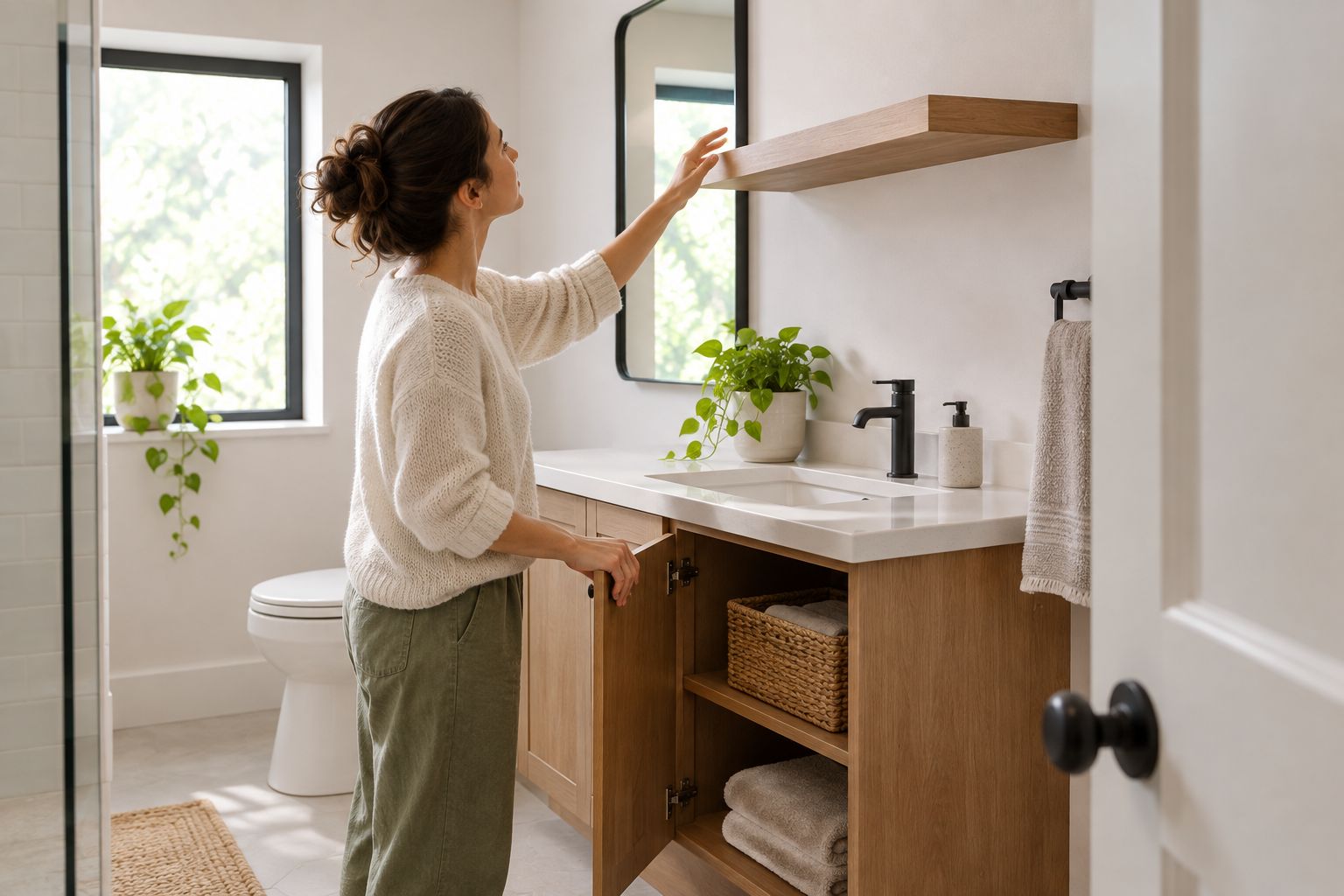
A shelf's stated load limit applies to the product and installation conditions described by its maker. Check both before buying. The shelf material alone does not tell you what the wall, anchors, brackets, or assembled unit can support.
For a wall-mounted shelf, read what hardware comes with it and what the instructions require. Confirm whether your wall and preferred position match those requirements. If the listing does not state a load limit or give adequate installation details, choose another shelf for heavy bottles or stacks of towels rather than guessing.
For a freestanding unit, inspect its listed dimensions and assembly requirements. Think about whether its position leaves a clear path and whether you can access its lower shelves. Follow any product-specific stability or anchoring instructions; a unit that stands on the floor can still have requirements beyond simply placing it there.
In 2026, treat unsupported weight claims and vague mounting descriptions as unanswered buying questions. Ask the seller for the exact product instructions before you commit. Do not substitute another shelf's specifications just because the two look alike.
Which shelf material works in your bathroom?
Choose a material after checking where the shelf will sit and how the specific product is finished. A shelf near the shower faces a different routine from one across the room, but proximity alone does not prove that any product is suitable for direct splashes.
Wood, metal, glass, and plastic shelves each have different surfaces and construction details. Those labels are a starting point, not a care guide. Check the listing for the finish, cleaning instructions, hardware, and any stated limits on use. In particular, do not assume a wood product is water-resistant or that metal hardware will handle a damp location without checking the maker's information.
Think about cleaning as part of fit. An open shelf leaves surfaces and stored items visible, which makes it easier to spot clutter but also means you will see anything left on display. A container can group small items, provided it fits the shelf and remains easy to lift off when you wipe underneath.
Betterhouse lists a Bathroom Storage Wood Box made of solid pine, with overall dimensions of 19.5 inches long, 7 inches wide, and 3 inches tall. It is a storage box, not a bathroom shelf. If you want to set it on a shelf, compare all three exterior dimensions with that shelf's usable space and check the shelf's load guidance; the box listing does not establish the shelf's capacity or the box's suitability for splashes.
Why bathroom shelf choices vary
Two bathrooms with similar floor plans can call for different shelves. Use these factors to narrow the decision instead of searching for a single best-looking option.
- Available wall or floor space: A wall shelf preserves floor area; a freestanding unit needs a footprint that stays clear of daily movement.
- What you store: Small sink-side items, tall bottles, containers, and folded towels need different amounts of usable depth and overhead clearance.
- Wall and installation conditions: Wall-mounted options depend on the product's hardware and instructions matching the installation site.
- Fixture access: A shelf must not prevent a door from opening or make a sink, toilet, or cabinet awkward to use.
- Cleaning routine: Decide whether you can remove items and wipe around the shelf without turning a quick cleanup into a furniture move.
- Product documentation: Clear dimensions, care guidance, and load instructions make it possible to check a shelf against your room before ordering.
Best for everyday use is the shelf whose documented fit and installation match your room. If a listing leaves the measurements or support conditions unclear, keep comparing. In 2026, a finish you like is not a substitute for the missing information.
Can you put a shelf above the toilet?
Yes, if the shelf or unit fits the measured space, leaves the toilet usable, and preserves access for cleaning and maintenance. Check the product's installation and load instructions. Measure around the actual toilet rather than relying on a listing photo of a different bathroom.
Should you choose a wall shelf or a freestanding shelf?
Choose a wall shelf when keeping the floor clear matters and you can install the specific product as instructed. Choose a freestanding shelf when you have the floor space and its footprint will not obstruct doors, fixtures, or your path through the room. Neither option is better without those checks.
What if the shelf listing does not show a load limit?
Do not assign it a load limit yourself. Request the exact product's guidance or choose a listing that states its support requirements, especially if you plan to store full bottles, containers, or stacks of towels. Appearance does not establish capacity.
FAQ
How do I choose a bathroom shelf for a small bathroom in 2026?
Measure the usable wall, floor, or counter space, then check door swings and fixture access. Choose the shelf type that holds your items without blocking your daily route or cleaning access.
What should I check before buying a wall-mounted bathroom shelf?
Check its full dimensions, stated load limit, included hardware, and installation instructions. Confirm that those instructions suit the exact wall and position you intend to use.
Is a freestanding shelf better than a wall shelf for a bathroom?
A freestanding shelf is better when you cannot mount a wall shelf and have enough clear floor space. A wall shelf is better when floor clearance is the priority and you can install it as directed.
Can I use a wood shelf near a bathroom sink?
Use a wood shelf near a sink only when the specific product's finish and care instructions support your intended placement. Wood as a material does not, by itself, establish resistance to splashes.
How deep should a bathroom shelf be?
It should be deep enough for the items you plan to store without projecting into the space you need for the sink, toilet, doorway, or walkway. Measure those items and the room before choosing a listed depth.
Will the Betterhouse Bathroom Storage Wood Box fit on my shelf?
The Betterhouse bathroom storage box measures 19.5 inches long, 7 inches wide, and 3 inches tall overall. Compare those exterior dimensions with the shelf's usable surface and leave room to lift the box off for cleaning.
Do I need to check bathroom shelf weight limits?
Yes. Check the exact shelf's stated load limit and installation requirements against what you intend to store; do not infer capacity from its appearance or material.
One last thing
Before ordering in 2026, put a temporary paper outline or an empty container where the shelf would sit, then use the bathroom normally. That simple check shows whether your hand reaches the items comfortably and whether anything interferes with a door or fixture. Betterhouse bathroom storage accessories can help group small items, but they do not replace checking the shelf's usable dimensions and support instructions.