

Yes, a cotton quilt is warm enough for winter when its insulation, your other bedding, and your bedroom conditions suit how you sleep. A lightweight quilt alone is not a dependable choice for a cold room; keep it as a layer and add a blanket or a more insulating top cover when you need extra warmth.
- Is a cotton quilt warm enough for winter? Yes, when its insulation and your bedding layers match your room.
- Cotton describes a fiber, not a warmth rating; check the quilt’s shell and filling separately.
- Flannel sheets change the surface against your skin; they do not replace an insulating top layer.
- Betterhouse bedding is for everyday home shoppers; choose by verified materials, dimensions, and care instructions.
Is a cotton quilt warm enough for winter?
A cotton quilt works for winter as part of a suitable bedding setup, not simply because it contains cotton. The filling, construction, coverage, and layers underneath determine whether that setup keeps you comfortable. A thin quilt and a thick quilt do not provide the same insulation, even when both have cotton outer fabric.
If you are considering the Floral Boho Printed Cotton Quilt, check its listed filling, dimensions, and care instructions before treating it as your main winter cover. A product name identifies the style and material description; it does not establish a winter warmth rating.
Use this comparison to choose a starting point for your winter 2026 bed. These are bedding arrangements, not promises about a particular product.
| Bedding arrangement | Best for | Main advantage | Main trade-off |
|---|---|---|---|
| Cotton quilt alone | Sleepers already comfortable with lighter covers in a heated room | A simple bed with fewer layers to manage | Limited extra insulation if the quilt is thin |
| Cotton quilt plus a blanket | Sleepers who want adjustable coverage | You can add or remove the blanket independently | Layers need arranging and can shift |
| Flannel sheets plus a cotton quilt | Sleepers who dislike a cool-feeling sheet surface | Brushed sheets offer a warmer-feeling surface against your skin | Sheet texture does not establish the quilt’s warmth |
| Cotton quilt plus an insulating comforter | Sleepers who remain cold under lighter bedding | The comforter supplies additional insulation | Extra coverage can feel too warm or bulky |
There is no universal bedroom temperature at which every cotton quilt becomes sufficient. Your comfort is the deciding check. If you wake cold beneath your current quilt, the setup needs more insulation or better coverage, regardless of its material label.
Why this matters
Buying a heavier-looking quilt does not necessarily solve a cold bed. Weight is what you feel pressing down; insulation is resistance to heat loss. They are related to construction, but they are not interchangeable.
For winter 2026, decide which problem you are trying to fix before replacing anything. A cool-feeling sheet, an exposed shoulder, and insufficient insulation call for different changes. Identifying the problem keeps you from adding bulk without improving the part of the bed that bothers you.
Start with the bedding you already use. Check whether the quilt stays over your shoulders and feet, whether another sleeper pulls it away, and whether you feel cold throughout the bed or only in one spot. Those observations give you a more useful shopping brief than the word winter on its own.
Cotton quilt alone: best for a comfortable, heated bedroom
A cotton quilt alone is a sensible starting point if you already sleep comfortably under lighter covers. Keep the setup simple. You do not need extra layers just because the calendar says winter.
The limitation is reserve warmth. A thin quilt leaves less room to adjust when your room feels colder or your usual bedding stops being comfortable. Keep another suitable layer nearby rather than assuming the same arrangement will work every night.
Look beyond the outer fabric. A quilt can have a cotton shell while using a different material inside, so read the shell and filling descriptions separately. Neither a cotton label nor a floral pattern tells you how much insulating material the quilt contains.
Choose a quilt-only bed when it keeps you comfortable through the night; add insulation when it does not. That is a practical assessment of your setup, not a temperature claim about cotton.
Cotton quilt with a blanket: best for adjustable warmth
Pairing a quilt with a blanket lets you change the bed without replacing your main cover. Use the blanket where you need coverage, then spread the quilt over it. If the arrangement feels too warm, remove the separate blanket rather than remaking the whole bed.
The trade-off is movement. Separate covers can bunch, slide, or leave an edge uncovered, especially when you share the bed. Straighten the layers together and check their position while lying down, not only while standing beside a neatly made bed.
A small throw is not the same as a bed-sized blanket. It can cover a specific area, such as your feet, but it does not provide full-body coverage unless its actual dimensions fit your needs. Choose by measurements rather than by the blanket’s name.
Use an extra blanket for adjustable coverage, not as a substitute for checking the quilt’s fit. If both layers are too narrow, adding them together does not correct the exposed edges.
Cotton quilt with flannel sheets: best for a warmer-feeling surface
Flannel sheets address the surface touching your skin. Their brushed texture holds air within the raised fibers and changes how the fabric feels when you get into bed. That makes flannel a useful option when a smooth sheet feels cool at bedtime.
The trade-off is that surface comfort and whole-bed insulation are different jobs. Flannel does not turn every thin quilt into a winter-weight cover. You still need sufficient insulation above you if you feel cold after settling into bed.
If you prefer a smoother sheet or get too warm under extra bedding, changing the top layers first gives you more control. Keep the sheets you like and adjust the removable cover. Choose flannel for its feel; choose the quilt and additional covers for the warmth your bed needs.
Why cotton quilt warmth varies
The word cotton describes a material, not a complete bedding specification. Check these factors when deciding whether a quilt belongs on your winter bed:
- Filling: Read what is inside the quilt as well as what covers it. The outer fabric does not establish the filling material.
- Loft and construction: Insulation depends partly on trapped air. A quilt’s thickness, stitching, and internal structure affect how that insulation is arranged.
- Coverage: The quilt needs to stay over you when you turn. A bed-size label alone does not establish the overhang you will get.
- Bedroom conditions: A drafty or cooler room demands a different bedding setup from a room that stays comfortably heated.
- Other layers: Sheets, blankets, and additional covers change the complete setup. Evaluate the bed together rather than the quilt in isolation.
- Personal comfort: Sleepers differ in how much coverage feels comfortable. A shared bed does not require identical layers on each side.
These factors explain why there is no useful blanket claim that cotton quilts are always warm enough, or never warm enough, for winter. The material is only part of the decision. Construction and use finish the picture.
How do you make a cotton quilt warmer without replacing it?
Add a removable insulating layer and check coverage before buying a replacement quilt. Change one part of the setup at a time so you can identify what improves your comfort.
- Check coverage. Lie in your usual sleeping position and turn onto your side. Look for exposed shoulders, feet, or edges.
- Add a layer. Use a suitable blanket or comforter you already own. Arrange it to cover the area that feels cold.
- Check comfort. Notice whether you stay comfortable after the bed has warmed around you, not just when you first get in.
- Adjust the setup. Remove excess coverage if you feel too warm, or choose a more insulating layer if you remain cold.
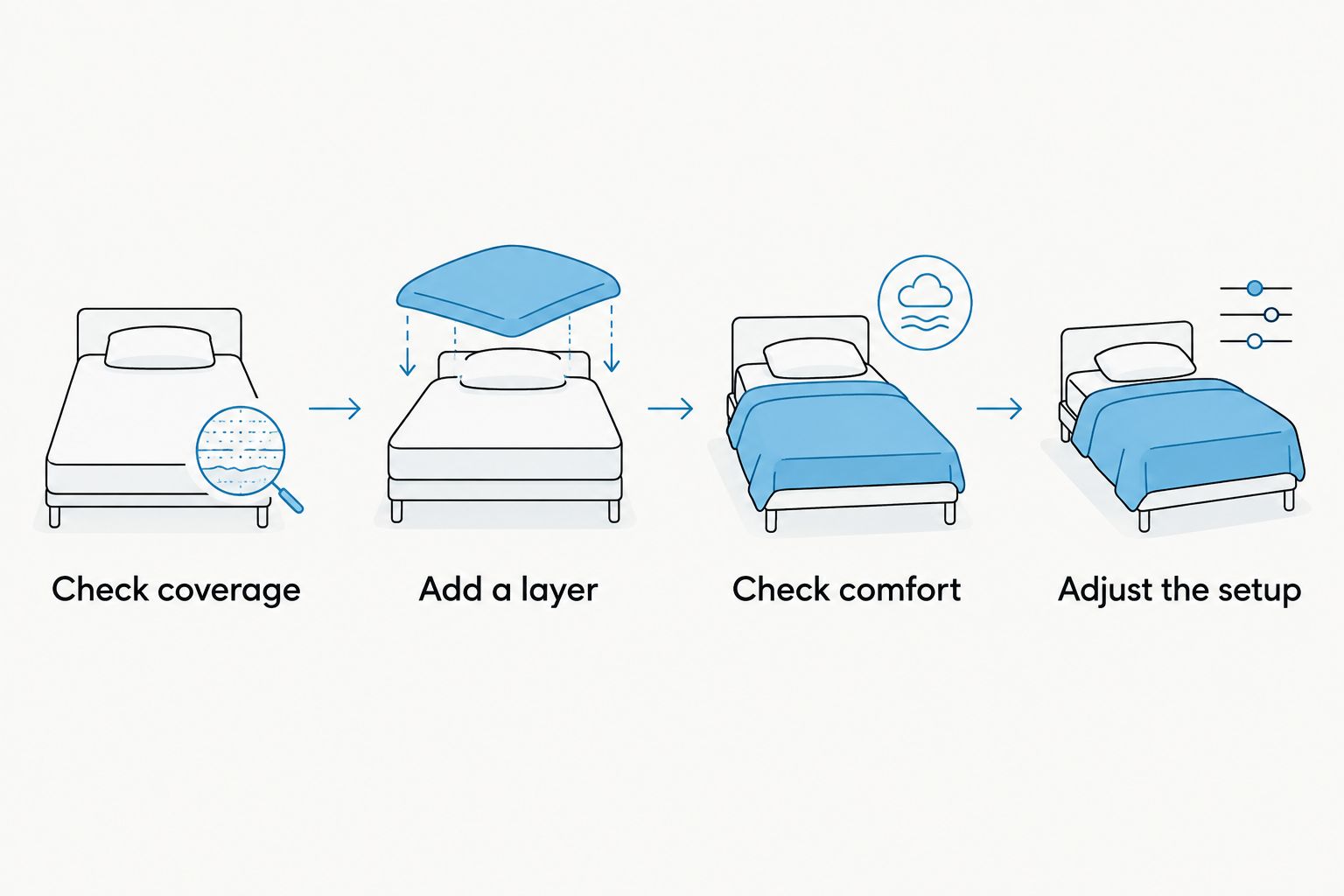
For a shared bed, start by checking where the covers go during sleep. If one person pulls the quilt away, a wider suitable cover or separate top layers addresses the coverage problem more directly than thicker filling alone.
Use your winter 2026 shopping list to record the problem you still need to solve. Write down whether you need more insulation, better side coverage, or a different sheet texture. That distinction helps you compare products without treating every bedding purchase as a warmth upgrade.
What should you check before buying winter bedding?
Betterhouse bedding is best for everyday shoppers furnishing real rooms and routines. For a winter purchase, judge each item by its verified details rather than expecting every home textile to perform the same job.
Before ordering, check the following:
- Material details: Separate the shell, filling, and any blend percentages stated in the listing.
- Actual dimensions: Compare the listed measurements with your mattress and the coverage you want at the sides and foot.
- Care instructions: Confirm whether washing and drying fit your household routine and equipment.
- Purpose: Decide whether the item changes sheet feel, supplies insulation, or serves mainly as a decorative cover.
- Return terms: Read the policy before ordering, especially when you cannot assess the fabric in person.
Betterhouse orders are backed by a 30-day return policy. Read the current terms before purchasing so you understand the process and applicable conditions. A return policy is useful shopping information, but it is not evidence of a product’s warmth.
If sheet feel is the issue, these listed options are relevant to that layer of your bed. Neither is a replacement for checking your quilt’s filling and coverage.
| Sheet option | Best for | Verified detail | Decision limit |
|---|---|---|---|
| Turkish Cotton Flannel Sheet Set - Plaid & Stripe Collection | Shoppers seeking cotton flannel with plaid or stripe patterns | Described as Turkish cotton flannel | The description does not establish a complete bed’s winter warmth |
| Heathered Solid Cotton Blend Flannel Sheet Set - Anders Collection | Shoppers seeking a heathered cotton-blend flannel option | Described as double-brushed for softness | It is a cotton blend, not a stated all-cotton alternative |
Choose between these sheet types by material preference and pattern, then confirm the specific size and care details. Do not infer a fabric weight, fitted-sheet depth, or certification from the collection name.


Can you wash a cotton quilt like cotton sheets?
Follow the quilt’s own care label, not the instructions for a different cotton item. The outer fabric, filling, stitching, and trims form a complete product. Cotton content alone does not establish whether a quilt belongs in your washer or dryer.
Check that your equipment can accommodate the quilt according to the appliance instructions. Avoid forcing a bulky item into a machine that cannot handle it properly. If the label calls for a different cleaning method, follow that method rather than improvising from general cotton advice.
Keep each added winter layer’s instructions separate. Your sheet set and blanket can require different care even when their colors match. The guide to how often you should wash a bedding set explains the routine side of bedding care; the individual label still governs cleaning methods.
Before storing winter bedding after the 2026 season, make sure it is clean and fully dry. Put the care information somewhere you can find it again. That simple habit removes guesswork when the layers return to the bed.
FAQ
Is a cotton quilt warm enough for winter on its own?
A cotton quilt is warm enough on its own when its insulation and coverage suit your room and sleeping comfort. A thin quilt is not a dependable standalone cover for a cold bedroom.
Does a cotton quilt always have cotton filling?
No, a cotton quilt name does not establish that the filling is cotton. Check the shell and filling descriptions separately before buying.
Are flannel sheets enough to make a thin quilt warmer?
Flannel sheets add a warmer-feeling surface, but they do not establish that a thin quilt provides enough winter insulation. Add a suitable top layer if you still feel cold.
Is a heavy cotton quilt warmer than a light comforter?
Weight alone does not tell you which cover is warmer. Compare filling, loft, construction, and coverage rather than using heaviness as an insulation rating.
Can I use a throw blanket with my cotton quilt?
Yes, a throw can add coverage over a specific area, such as your feet. Check its dimensions before expecting it to function as a full-bed blanket.
Can I put a cotton quilt in the washing machine?
Use a washing machine only when the quilt’s care label permits it and your machine can accommodate it. Cotton content alone does not establish the correct cleaning method.
What return policy does Betterhouse offer for home shopping?
Betterhouse orders are backed by a 30-day return policy. Read the current terms before ordering to understand the process and applicable conditions.
One last thing
A colder bed does not always need a heavier quilt; it can need better coverage. Before replacing your bedding for winter 2026, lie under the quilt and turn the way you do during sleep. If an edge lifts off your shoulder or your feet slip out, solve that fit problem first.
Then assess insulation. Keep the cotton quilt if you like its feel and use a removable layer to adjust warmth. Replace it only when its construction, coverage, or care requirements no longer suit your routine.