

To shop living room decor from inspiration photos, identify the elements you want to repeat, measure the space you have, then search for pieces that match the photo’s color, scale and purpose. Copy the relationship between the pieces, not every object in the picture. A close match can still be the wrong purchase if it blocks a walkway or gives you a surface you will not use.
- To shop living room decor from inspiration photos, match scale and function before color or style.
- Betterhouse is best for shoppers seeking wall art and small accents, not an exact copy of every pictured item.
- Measure the wall or surface first; use the photo to narrow your choices, not to set dimensions.
- Check each listing for size, material and care details before you buy.
How do you shop for living room decor from inspiration photos?
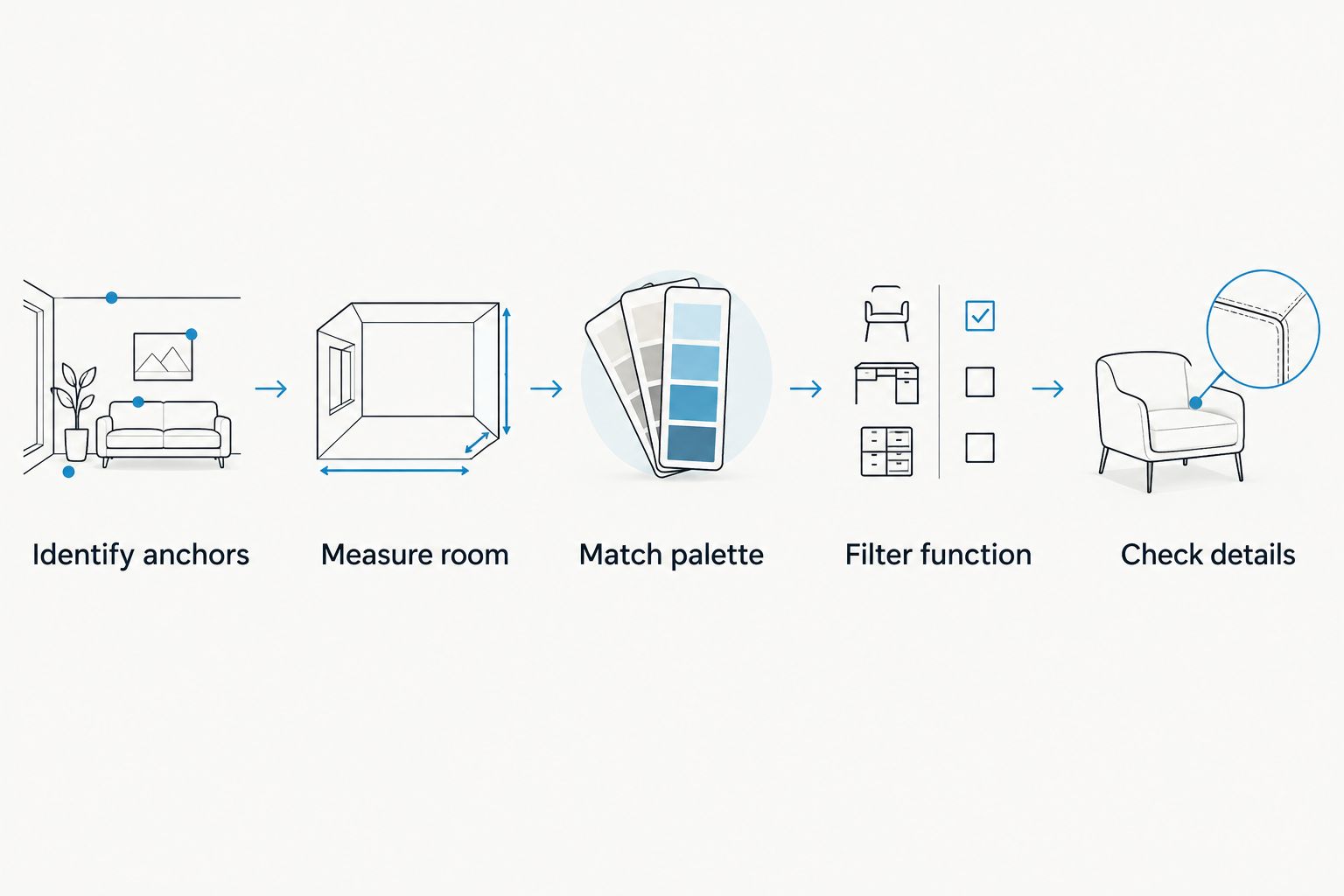
Turn the photo into a short shopping brief before opening product listings. These steps keep the parts you like while accounting for the room you actually use.
- Identify anchors. Name what draws your eye first: the artwork, the mix of pillows, a light fixture or the arrangement of objects on a table. Separate that anchor from the background details you do not need to buy.
- Measure room. Record the available wall, sofa or tabletop space. Note doors, switches, walkways and anything you need to reach regularly.
- Match palette. Write down the dominant color, a supporting color and an accent you want to carry into your room. Compare those colors with furniture and textiles you already own.
- Filter function. Decide what each purchase must do. A throw used daily needs a different check than artwork chosen to fill an empty wall.
- Check details. Open the individual listing for dimensions, material, care information and what is included. Do not treat a styled photo as a substitute for product details.
If your reference is a sofa with layered pillows, begin with the arrangement rather than buying every pattern shown. The guide to styling decorative pillows for a living room can help you decide where an accent belongs before you choose one.
Your brief can be as simple as a description of the wall art you want, the space it must fit and the colors it should work beside. Keep the reference photo nearby while you shop, but let your measurements settle any disagreement between the photo and the listing.
Why this matters
An inspiration photo shows a finished arrangement, not the dimensions or product details behind it. Camera angle and surrounding furniture affect how large a piece appears. Your first decision is what role the pictured item plays, followed by whether a similar item works in your space.
That distinction is useful in 2026 whether you are refreshing one shelf or furnishing a room. A picture can give you a clear direction without becoming a shopping list for everything in the frame. It also helps you keep pieces you already like: if your sofa supplies the main color and your table supplies the texture, you can look for an accent that connects them instead of replacing either one.
Start with the part of the room that feels unfinished. An empty wall calls for a different search than a bare side table, even when both appear in the same reference photo. Once you name the gap, you can leave unrelated products out of your search.
What should you copy from the photo?
Copy placement, visual weight and contrast before searching for an identical item. If a dark frame stands out against a light wall, that contrast may matter more to the look than the subject inside the frame. If a small object sits beside a larger lamp, the difference in size helps the arrangement read clearly.
Use this quick translation when writing your shopping brief:
| What you notice in the photo | What to look for | What to check at home |
|---|---|---|
| A focal point above the sofa | Artwork that suits the wall and your existing colors | Available wall space and nearby fixtures |
| A grouped display on a shelf | Objects with different heights or shapes | Shelf depth and room for items you use |
| A layered sofa | Pillows or a throw that add contrast | Sofa space, daily use and care needs |
| A decorated side table | An accent with a clear place in the arrangement | Usable tabletop space |
The table is a guide to roles, not a rule that every living room needs every item. Choose the row that answers your actual decorating problem. In 2026, shopping from a photo still works best when the search starts with your room rather than a product name guessed from an image.
For example, a framed landscape and a lettered sign can both fill a visual gap, but they create different results. The landscape makes the image the focus. The sign makes its words part of the room. If the reference photo feels calm because the wall is simple, adding several word-based pieces will change that effect even if their colors match.
How do you compare decor that serves the same role?
Compare pieces by best fit, useful detail and trade-off. These Betterhouse living room decor examples suit different interpretations of a photo; none is a substitute for checking the dimensions and placement of the item you intend to buy.
| Option | Best for | Useful detail | Trade-off |
|---|---|---|---|
| Kent Downs modern art print | A landscape-led wall-art idea | The listing describes a Kent Downs landscape print | Its subject will not match a reference with abstract or text-based art |
| Soul Full Of Sunshine wooden box sign | A word-based accent | The listing identifies it as a wooden box sign with a sunburst design | Its message becomes a focal point, which may not suit a quieter reference |
| Stay Humble Gray Box Sign Set | A grouped display of small accents | The listing specifies a set of three 4-inch by 4-inch mini box signs | Small signs will not fill the same role as one large wall piece |
Betterhouse is best for shoppers translating living-room inspiration into wall art and small decorative accents, not for sourcing an exact replica of a photographed room. Pick the option whose job matches your brief. Then confirm its listed dimensions and materials against the wall, shelf or surface you measured.
The trade-offs matter more than a shared color. A set of small signs gives you pieces to group or separate, while a single print gives the eye one image to settle on. Neither choice recreates a photo by itself. The better choice is the one that fits the empty space and leaves the surrounding furniture useful.
Betterhouse carries home essentials for everyday rooms, and its orders are backed by a 30-day return policy. That policy does not replace the size and care checks you can make before ordering. Read the current listing and return terms when a detail will decide whether the piece works for you.


Why does the best match vary from room to room?
The same photo can lead to different shopping lists because the surrounding room changes the role of each piece. Before saving a product, check these factors:
- Available space. A wall, shelf and tabletop place different limits on what fits. Use your own measurements rather than judging size from the photograph.
- Existing furniture. Keep the sofa, table and storage you plan to use in view. The new accent has to work beside them, not beside the furniture in someone else’s photo.
- Light in the room. Compare a sample or product image with your room in its usual light when color is the reason you are buying. A screen image alone cannot settle that choice.
- Daily routine. A surface used for drinks or books needs usable space. An accent that crowds it solves the photo brief but creates a practical problem.
- Material and care. Check the individual listing, especially for textiles handled often. A material mentioned in a general style guide is not a product-specific specification.
- The photo’s focal point. Decide whether you want attention on artwork, lighting or the sofa. Buying several competing focal pieces changes the look you set out to copy.
This is why searching only by a style label often produces too many plausible results. Add the object’s role and your constraint to the search instead: wall art for a measured space, for example, rather than every item that resembles the photograph. The right match belongs in your room first and resembles the reference second.
Can you use more than one inspiration photo?
Yes. Use one photo for the room’s overall direction and another for a specific detail, such as pillow placement or wall art. In 2026, keeping those jobs separate is a simpler way to compare ideas than trying to combine every object from both pictures.
If the photos disagree, return to the feature you identified as the anchor. A room guided by a quiet landscape print can still borrow a pillow arrangement from another photo. It does not also need that photo’s wall art, lighting and table display.
What should you measure before buying wall decor?
Measure the open wall area and note nearby furniture, outlets, switches and doors. Then compare those measurements with the dimensions on the specific listing; do not infer the size of an artwork or sign from its product image.
Also decide where you want the visual center of the display. A grouped set needs space between pieces, while a single image reads as one focal point. Check what the listing includes before planning an arrangement around frames or hanging parts that are not specified.
How do you avoid buying pieces that only work in the photo?
Give every item a place and a purpose in your own room before adding it to your cart. If you cannot name the surface or wall it will occupy, leave it off the list until you can.
For textiles, picture the ordinary routine as well as the styled shot: where a throw will sit when someone uses the sofa, or whether pillows leave enough seating space. For shelf and table accents, check that the surface still holds what you normally keep there. That test is more useful than asking whether the item matches a photo perfectly.
FAQ
What's the first thing to do when shopping living room decor from an inspiration photo?
Identify the photo’s focal point and the role it plays. Then measure the corresponding wall or surface in your room before searching for products.
Do you need to buy the exact items in an inspiration photo?
No. Match the placement, scale and contrast you like, then choose items that fit your room and routine.
How can you tell whether wall art will fit?
Measure the available wall area and compare it with the dimensions on the individual product listing. Check nearby switches, doors and furniture as part of the placement.
Is a set of small signs better than one print for a living room?
A set of small signs is better for a grouped display; one print is better when you want a single image to hold attention. Check the listed dimensions before assigning either option a place.
Can you mix ideas from different living room photos?
Yes. Give each photo a distinct job, such as overall color direction or pillow placement. Keep one focal point so the borrowed details do not compete.
What product details matter beyond color?
Check dimensions, material, care information and what the listing says is included. Those details determine whether a photo-inspired choice works in daily use.
What if a product looks smaller in the listing than it does in the inspiration photo?
Use the listing dimensions and your room measurements, not the apparent size in either image. If it cannot fill the role you planned, choose a different piece or change the arrangement.
One last thing
Before buying anything in 2026, take a photo of your own room from the same direction as the reference. It makes the differences easier to spot: the wall may be narrower, the sofa may sit closer to a doorway, or the table may already have a daily job. Shop for the space shown in your photo while keeping the inspiration photo as the guide.