

Throw blankets for senior living communities are durable bedding accessories chosen for warmth, easy laundering, and resident comfort in common rooms, dining areas, and private suites — not the decorative throws sold for a home sofa. Facility buyers weigh fire safety, industrial wash cycles, and dementia-friendly design first; softness and color come second.
- Fleece and microfiber throws hold up best under industrial laundering for senior living communities in 2026.
- Solid, muted colors reduce confusion for memory care residents compared to busy patterns.
- Weight matters more than thread count — a 3 to 4 lb throw adds warmth without restricting limited mobility.
- Buy in bulk with a rotation plan; single blankets wear out fast under daily communal use.
- Skip decorative-only throws with fringe or loose trim — they're a fall and entanglement risk.
Why this matters for senior living communities
A throw blanket in a private home gets washed once a month, folded over an armrest, and admired. A throw blanket in a senior living community gets washed weekly in a commercial machine, dragged across wheelchair arms, and used by a different resident every shift. The fabric, weight, and construction requirements are not the same, and buying home-market throws for a facility usually means replacing them within a year.
Facilities restocking common rooms often start browsing a general home essentials retailer like Betterhouse before sourcing bulk institutional textiles, since the fabric categories — fleece, cotton, sherpa — are the same ones home shoppers already compare. The difference for senior living communities is durability under repeat industrial washing and safety features like flame resistance and no loose fringe.
Staff time is the hidden cost. A throw that pills after ten washes, or one that needs hand-laundering, turns into extra work multiplied across dozens of residents. Getting the fabric right the first time cuts replacement cycles and laundry labor for the rest of 2026 and beyond.
Choose commercial-grade fabric that survives industrial laundering
Home-grade throws pill, shed, or shrink under the high-heat, high-agitation cycles most facilities run. Commercial laundering is rougher than a home washer-dryer set on delicate.
- Pick 100% polyester fleece or microfiber for the highest wash-cycle survival rate
- Avoid loosely woven cotton knits that unravel after repeated tumble drying
- Check for double-stitched or bound edges instead of raw hems
- Confirm the manufacturer states machine-washable at commercial temperatures, not just "machine washable"
- Skip wool blends unless the facility has a dedicated low-heat laundry line
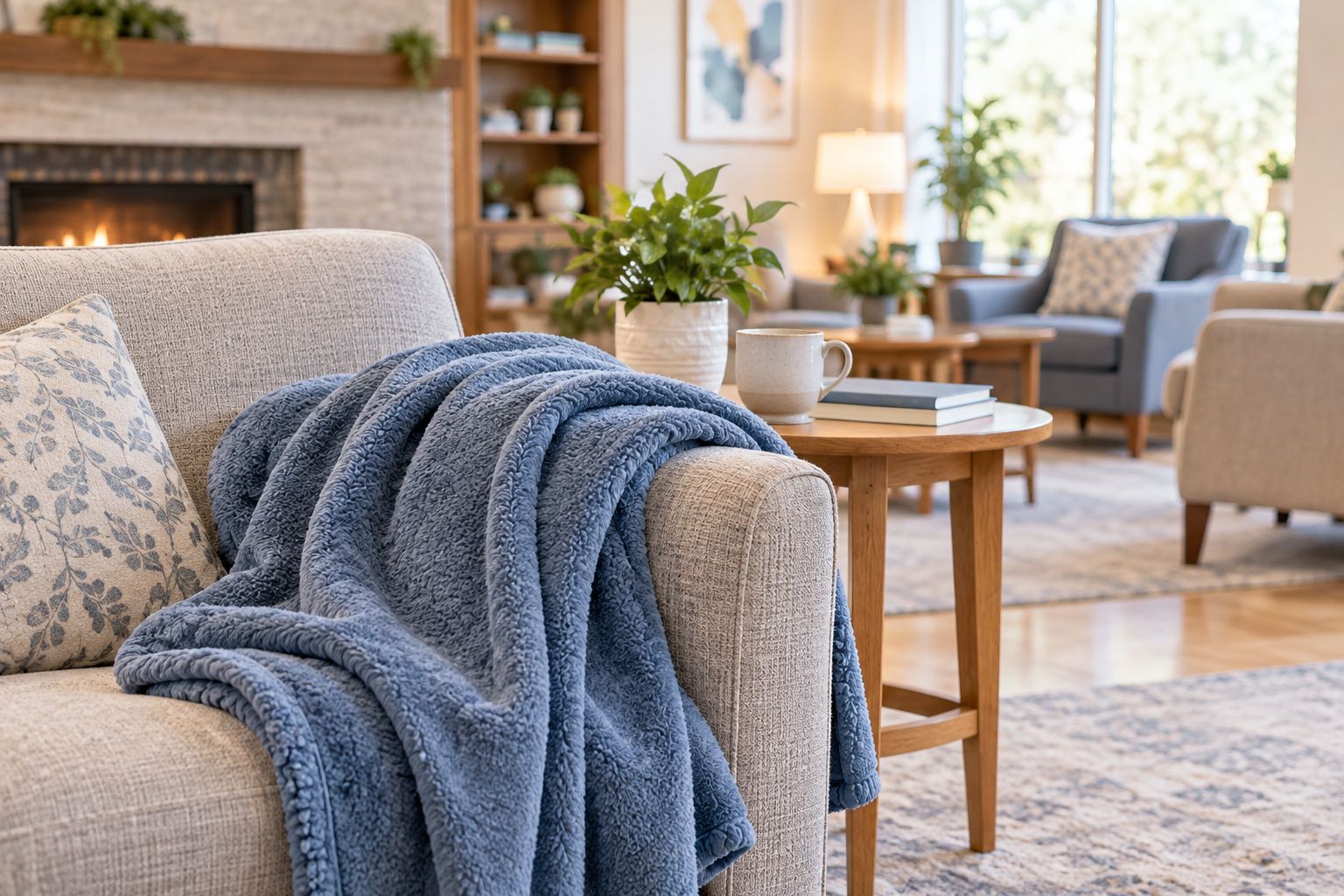
Prioritize weight and warmth for reduced mobility
Residents with limited mobility can't easily reposition a blanket that's slipped off, and a blanket that's too heavy can restrict movement for someone transferring in or out of a chair.
- Target a 3 to 4 lb throw for lounge chairs and wheelchairs
- Avoid weighted blankets in shared common areas unless clinically prescribed for a specific resident
- Choose a tight weave for warmth without bulk
- Test drape — a throw that slides off smooth vinyl chairs needs a non-slip backing or a larger size
Screen for safety features before ordering
Safety review matters more here than in any home-shopping decision. A throw with the wrong construction becomes a hazard, not a comfort item.
- Confirm flame-resistance compliance appropriate for institutional use
- Reject blankets with fringe, tassels, or long loose trim that can catch on wheelchair wheels or walkers
- Check for allergen-friendly materials if the community serves residents with skin sensitivities
- Avoid drawstrings, ties, or decorative cords entirely
- Look for reinforced seams that won't unravel into loose threads
Standardize sizing across common areas and resident rooms
Mixing sizes across a facility creates laundry chaos and makes bulk reordering harder every time stock runs low.
- Use a single standard size (commonly 50" x 60") for lounge and common-area throws
- Reserve a slightly larger size for bed-bound resident rooms
- Label bins by size and location to keep laundry sorting fast
- Order in matched sets so replacement pieces blend in visually
Simplify color and pattern for dementia-friendly design
Busy patterns and high-contrast prints can be disorienting for residents with cognitive decline. Memory care units in particular benefit from calmer visual choices.
- Choose solid or subtly textured fabrics over bold prints
- Pick muted, warm tones (soft blue, sand, sage) over stark white or black
- Avoid patterns that mimic shadows or gaps, which can read as physical obstacles to some residents
- Keep a consistent palette across a unit so new throws don't stand out as "different"
Budget for bulk purchasing and inventory rotation
A facility running dozens or hundreds of throws needs a replacement rhythm, not a one-time order.
- Order in bulk lots to lock in consistent fabric and color across replacements
- Keep a rotating backstock so worn throws get pulled without gaps in coverage
- Track wash cycles per batch to predict replacement timing
- Reassess supplier options annually as fabric quality or availability shifts
Train staff on care and rotation
Even the most durable throw fails early if laundry staff don't know the fabric's limits.
- Post wash-temperature guidance near the laundry room
- Separate fleece and cotton loads if their care instructions differ
- Flag pilling or thinning early so a throw gets pulled before it tears
- Rotate stock so no single blanket gets disproportionate daily use
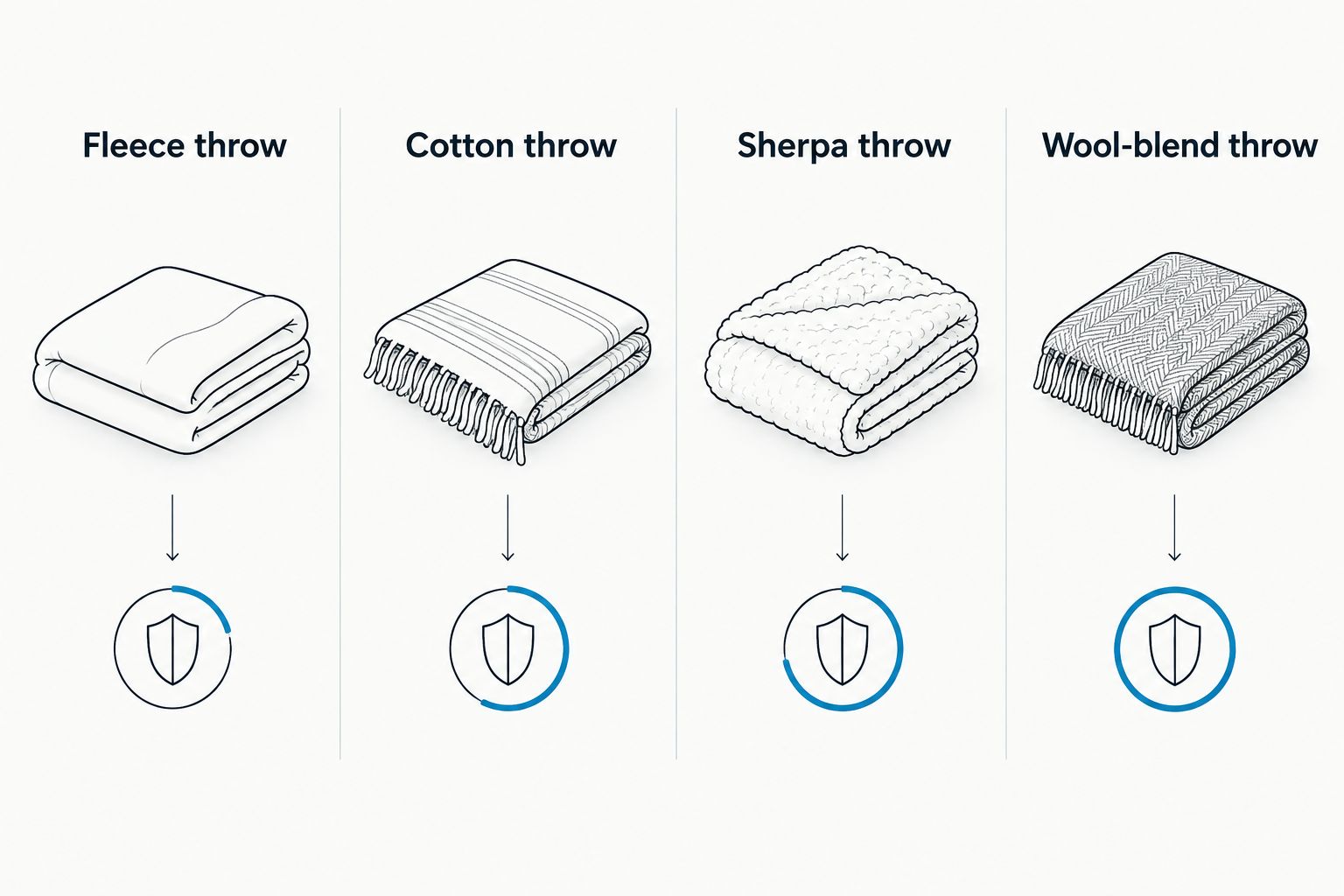
Comparing throw blanket options for senior living communities
| Option | Best for | Key limitation |
|---|---|---|
| Fleece/microfiber throw | High-traffic common rooms, frequent washing | Less breathable in warmer rooms |
| Cotton knit throw | Residents sensitive to synthetic fabrics | Wears faster under commercial laundering |
| Sherpa/plush throw | Colder units, bed-bound resident rooms | Bulkier, slower to dry |
| Wool-blend throw | Low-wash-frequency settings, private suites | Requires gentler laundering, higher care cost |
Fleece wins on durability for shared common areas in 2026 because it survives commercial wash cycles with the least pilling. Cotton is the better call for residents with synthetic-fiber sensitivities, even though it needs replacing sooner.
Common mistakes senior living communities make
- Buying decorative throws with fringe or tassels — these snag on wheelchair wheels and walker frames and create a fall risk.
- Ordering one color per unit instead of a matched set — mismatched replacements make a common room look patched together within months.
- Ignoring wash-cycle ratings — a throw rated for home laundering thins out fast under a commercial machine's heat and agitation.
- Skipping a rotation schedule — without backstock, a torn or pilled blanket sits in use until someone notices, instead of getting pulled early.
- Overlooking common-area kitchenette essentials while focused only on blankets — facilities restocking a lounge or break room often need small durable items too, like a beech wood cooking spoon or an absorbent dish towel for a shared kitchenette, alongside the textile order.
A throw blanket that needs hand-washing has no place in a senior living community's laundry rotation. That single sentence should guide every fabric decision made for 2026 restocking.
FAQ
What is the best fabric for throw blankets in senior living communities?
Fleece or microfiber is the best fabric for throw blankets in senior living communities because it survives commercial laundering with the least pilling. Cotton knits are gentler on sensitive skin but wear out faster under industrial wash cycles.
How often should facility throw blankets be washed?
Common-area throw blankets in senior living communities typically go through weekly commercial washing due to shared use across shifts. Bed-bound resident room throws may need washing more often depending on facility infection-control protocols.
Are fleece blankets safe for dementia care units?
Fleece blankets are safe for dementia care units when chosen in solid, muted colors without loose fringe or busy patterns. Bold prints and high-contrast designs can be disorienting for residents with cognitive decline.
How many throw blankets does a senior living community need per resident?
Most communities keep at least two to three throws per resident or common-area seat to account for laundering rotation. A backstock beyond that prevents coverage gaps when a blanket is pulled for wear or damage.
What size throw blanket works best in common areas?
A 50 by 60 inch throw is the standard size for common-area lounge chairs and wheelchairs in senior living communities. Bed-bound resident rooms often use a slightly larger size for full coverage.
Do throw blankets need fire-safety certification for care facilities?
Yes, throw blankets used in licensed care facilities generally need to meet institutional flame-resistance standards. Facilities should confirm compliance documentation with the supplier before bulk ordering.
Can cotton throws handle industrial laundering?
Cotton throws can handle industrial laundering but wear out faster than fleece or microfiber under high-heat commercial cycles. They're a better fit for lower-frequency laundering settings like private suites.
What colors work best for memory care throw blankets?
Solid, muted tones like soft blue, sand, or sage work best for memory care throw blankets because they avoid the visual confusion busy patterns can cause. A consistent palette across a unit also helps new blankets blend in rather than stand out.
One last thing
Most facilities plan their throw blanket budget around fabric cost and skip the laundry-capacity question entirely — but a fleece throw that needs a dedicated wash cycle separate from linens can quietly double laundry labor hours. Confirm the facility's laundry equipment can run fleece and cotton loads together before locking in a 2026 bulk order; that one check prevents the most common post-purchase regret in institutional textile buying.