

A throw blanket has no fixed expiration date: keep it while the fabric stays intact, feels comfortable, and comes clean with the care its label allows. Replace it when thinning, spreading holes, damaged seams, or persistent matting stop it doing its job. Age alone is not a reason to retire a blanket, and pilling alone does not prove it is worn out.
- How long does a throw blanket last? Judge fabric condition, comfort, and cleaning results—not age alone.
- Pilling is surface wear; thinning fabric and spreading holes deserve closer attention.
- Follow the blanket’s care label rather than applying one washing routine to every material.
- Betterhouse’s Argyle Reversible Throw Blanket specifies cold machine washing and flat drying.
How long does a throw blanket last?
A throw blanket’s useful life ends when it no longer provides comfortable, clean, usable coverage—not when it reaches a particular birthday. A blanket used on the couch every evening faces different wear from one brought out for occasional guests. The care instructions, construction, and condition matter more than a calendar estimate.
If you are considering a replacement in 2026, compare throw blankets for couches after checking whether your current blanket actually needs replacing. A changed room color scheme and a worn-out blanket are different problems.
Use this condition check before deciding:
| What you notice | What it means for your decision | Next move |
|---|---|---|
| A few surface pills, but intact fabric | Appearance has changed; the blanket still has usable fabric | Check whether the material allows gentle pill removal |
| A loose edge seam with sound fabric around it | The problem is localized | Repair the seam if the fabric can hold stitches |
| Thin patches or holes that keep spreading | The blanket is losing fabric integrity | Replace it for regular use |
| A flattened surface that feels uncomfortable | The texture no longer suits its job | Clean according to the label, then reassess |
| An odor that remains after appropriate cleaning | Routine care has not resolved the problem | Investigate the cause before using or storing it |
| Fading without structural damage | The change is primarily visual | Keep it if its appearance still works for you |
Do not stretch a fragile area to test it. Lay the blanket flat, look at the edges and frequently used sections, and compare those areas with less-worn fabric. You are looking for damage, not trying to create it.
Why this matters
Replacing a usable throw creates an unnecessary purchase. Keeping an uncomfortable or deteriorating one leaves you with something you avoid using. The useful middle ground is to distinguish a cosmetic change from a failure of fabric, cleanliness, or comfort.
For your 2026 home refresh, start with the routine the blanket serves. A throw folded across an armchair needs to look right; one pulled over your legs every night also needs to feel right and survive the cleaning you actually do. Neither job requires a blanket to look permanently new.
The same distinction helps when buying. A material name tells you something about the fibers, but it does not establish a product’s lifespan. Construction, finishing, use, and care still affect the result.
Why throw blanket lifespan varies
These factors explain why a single replacement schedule does not fit every throw:
- Frequency of use: Daily handling exposes the blanket to more rubbing, folding, and pulling than occasional use.
- Fabric construction: Raised loops and loose structures present places for jewelry, rough surfaces, or claws to catch. Inspect the actual fabric rather than judging from its name alone.
- Washing routine: Follow the permitted method, detergent guidance, and cycle instructions. A care label is specific to the finished blanket, not just its main fiber.
- Drying method: Heat, agitation, and hanging affect different textiles differently. Do not substitute tumble drying when the label specifies flat drying.
- Room conditions: Direct sunlight can fade textiles, while damp storage creates conditions for mildew. Store the blanket clean and completely dry.
- Household contact: Pets, spilled food, and use outdoors introduce different cleaning and snagging demands from occasional indoor use.
Match care to the blanket, not the blanket to your usual laundry settings. That recommendation is more useful than assigning every cotton, wool, or synthetic throw an unsupported number of years.
If a blanket moves between the couch, patio, and pet bed, acknowledge those separate uses. You do not have to keep it pristine, but you do need a cleaning method appropriate to the material and the contamination.
Which blanket materials need different care?
Material affects care decisions, but it does not provide a guaranteed service life. Use this comparison as a starting point, then read the individual product’s instructions.
| Material or construction | Best for | Practical advantage | Trade-off to check |
|---|---|---|---|
| Cotton | Shoppers who want a plant-fiber blanket | Available in woven constructions, including waffle weaves | Check shrinkage guidance and permitted drying methods |
| Wool | Shoppers comfortable following wool-specific care | Wool provides insulating warmth | Heat and agitation can cause felting; some products require specialist cleaning |
| Polyester microfiber | Shoppers considering a synthetic throw for daily use | Available in soft, fine-fiber constructions | Check heat limits and whether tumble drying is permitted |
| Plush or sherpa-style construction | Shoppers who prefer a raised, textured surface | Provides a different feel from a flat weave | The pile needs attention when assessing matting and cleaning results |
These categories overlap. “Sherpa” describes a surface style rather than proving a particular fiber composition, and “microfiber” describes fine fibers rather than a lifespan. Read the fiber content and care label together.
For a purchase in 2026, ask whether you can maintain the blanket as instructed. A washable item that requires flat drying still needs somewhere suitable to dry. A blanket that needs care you will consistently avoid is a poor fit for your routine, regardless of its appearance.
How do you tell whether to keep, repair, or replace it?
Inspect the blanket when it is clean and dry. Dirt, moisture, and temporary flattening can obscure what the fabric actually looks and feels like.
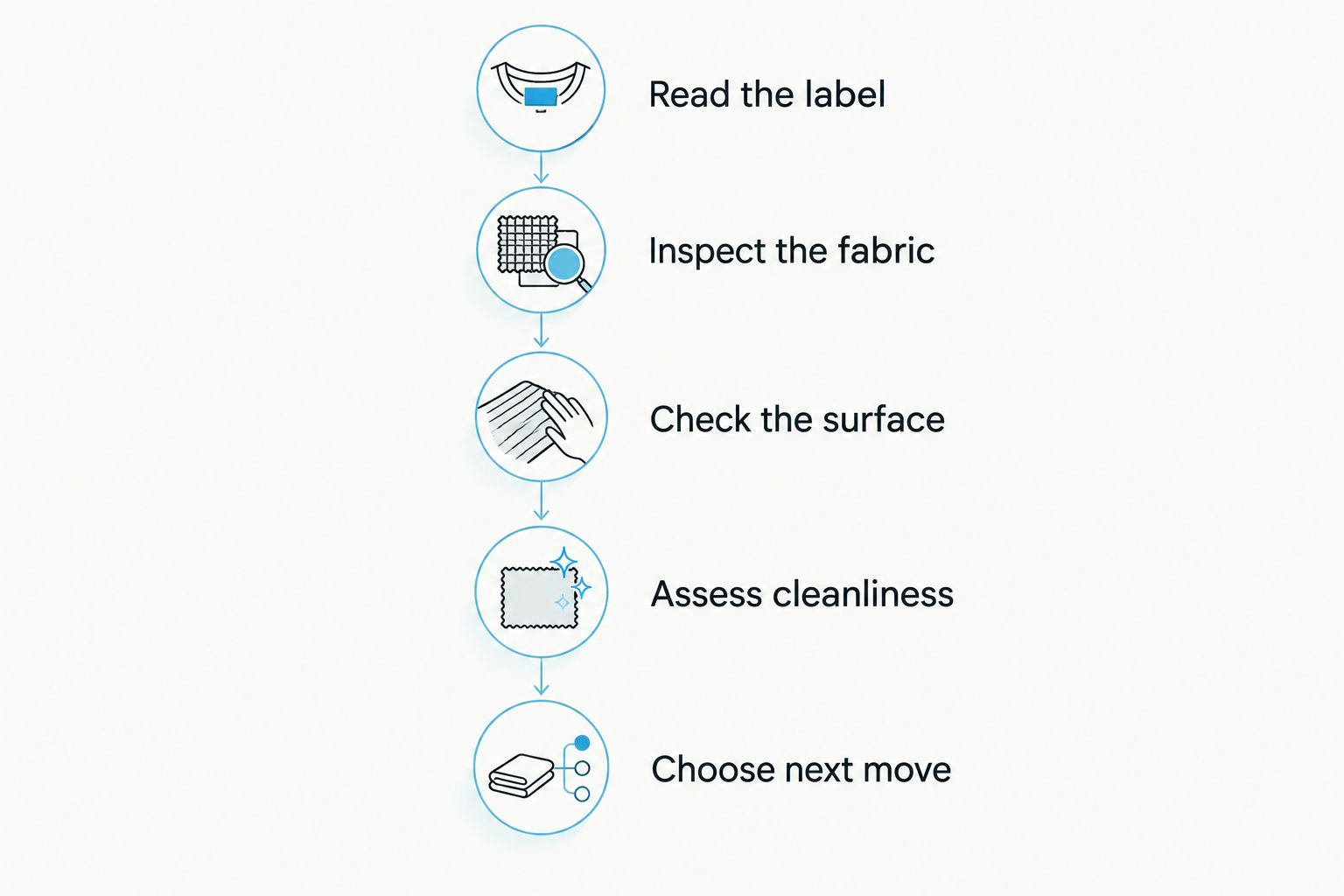
- Read the label. Identify the allowed washing and drying methods before trying to restore the surface. If the label is missing, seek the manufacturer’s instructions rather than assuming a hot wash is safe.
- Inspect the fabric. Look for thinning, open seams, damaged edging, and holes. Distinguish a seam that has come undone from fabric that is tearing around the stitches.
- Check the surface. Notice pilling, shedding, or matting. Compare the affected area with another part of the blanket and decide whether the change affects comfort.
- Assess cleanliness. After appropriate cleaning and complete drying, check for remaining odor or visible contamination. Do not cover a persistent problem with fragrance.
- Choose the next move. Keep an intact, comfortable blanket; repair localized damage where practical; replace one whose fabric or condition no longer suits regular use.
A repair makes sense only when the surrounding fabric remains sound. Stitching a loose hem is different from repeatedly closing holes in fabric that tears beside each repair. Stop treating widespread deterioration as a collection of isolated defects.
How can you help a throw blanket last longer?
Keep the care routine simple enough to repeat. You do not need a complicated textile schedule; you need to avoid instructions that conflict with the label.
Wash for the actual use
Clean a blanket when its condition and use call for it. Spills, visible soil, odors, and contact with someone who is ill are reasons to address cleaning rather than wait for a calendar reminder. Do not assign every throw the same washing interval.
Check closures and rough items in the rest of the load. Avoid exposing a delicate surface to open zippers or other snagging hazards. Follow the washer’s load guidance so the blanket has room to move and rinse.
Treat drying as part of care
The job is not finished when the wash cycle ends. Follow the stated drying method, and do not store the throw while it remains damp.
If flat drying is required, support the blanket rather than draping its wet weight from a narrow edge. If tumble drying is permitted, use the stated setting. A generic low-heat recommendation does not override a label that prohibits machine drying.
Store it where it stays dry
Fold the blanket only after it is fully dry. Choose a clean, dry storage location, and check seasonal blankets before returning them to a room.
Keep throws away from known snagging points, such as a rough furniture edge. Moving a blanket off that edge addresses the cause; repeatedly trimming pulled threads does not.
What should you check before buying a replacement?
Buy for the job your old throw could not do. If it was too small, check dimensions; if maintaining it was awkward, check the full care instructions. A different color will not resolve either problem.
Betterhouse is best for shoppers seeking everyday home essentials, including blankets, rather than a guaranteed blanket lifespan. Its blanket listings provide product details to compare, but the details below do not establish how many years either item will last.
| Product | Best for | Verified details | Limitation to consider |
|---|---|---|---|
| Argyle Reversible Throw Blanket | Shoppers looking for a throw with explicit care directions | Measures 50 inches by 60 inches; listed as 100% polyester microfiber; cold machine wash and flat drying | Instructions prohibit bleach, ironing, and dry cleaning; flat drying must fit your routine |
| 100% Cotton Small Waffle Weave Blanket - Hazel Collection | Shoppers considering a lightweight cotton blanket for bedding | The listing identifies 100% cotton and a lightweight waffle weave | It is listed as a bedding blanket; confirm dimensions and care before choosing it for a couch |
The Argyle Reversible Throw Blanket measures 50 inches across by 60 inches long. Compare that coverage with how you sit, whether you tuck the blanket around your feet, and where you will store it. Dimensions describe fit, not durability.
The 100% Cotton Small Waffle Weave Blanket - Hazel Collection offers a different material and construction. Its lightweight description does not establish machine-washing instructions, shrinkage behavior, or a lifespan. Check those details separately rather than transferring care advice from another cotton blanket.


Betterhouse states a 30-day return policy. That is a return window, not a promise that a blanket will last a particular length of time. For a 2026 purchase, read the applicable return terms before relying on that window, and keep the care information for later reference.
Does pilling mean a throw blanket needs replacing?
Pilling alone does not mean a throw blanket needs replacing. Pills are tangled fibers on the surface; the important question is whether the underlying fabric remains intact and comfortable.
Before using a fabric shaver or other removal tool, check whether it is suitable for the blanket’s construction. Raised loops, loose yarns, and fragile fabric need particular caution because a tool can catch or cut them.
Can you repair a torn throw blanket?
A localized tear or loose seam is worth assessing for repair when the surrounding fabric is sound. Woven and knitted constructions need different repair approaches, so match the method to the blanket rather than using the same stitch everywhere.
If a repair creates a stiff patch exactly where you rest your legs, the blanket might remain structurally usable but become uncomfortable. Judge the repaired result by its intended job, not just by whether the hole is closed.
Should you replace a faded throw blanket?
Fading alone is not a reason to replace a throw blanket. Keep it if the fabric is sound and the appearance still suits your room; change its placement if the faded side bothers you.
For a 2026 room update, separate decorating preferences from fabric wear. You can choose a new color without claiming the old blanket has reached the end of its useful life.
FAQ
How long does a throw blanket last with daily use?
Daily use does not establish a fixed throw blanket lifespan. Check for thinning, spreading holes, damaged seams, loss of comfort, and cleaning problems rather than replacing it by age alone.
How often should I replace my couch throw blanket?
Replace a couch throw when its condition no longer supports comfortable, clean use. Cosmetic fading or a few pills do not automatically require replacement.
Is a cotton throw blanket more durable than a polyester one?
Fiber content alone does not establish which throw blanket will last longer. Compare construction, care instructions, and the condition of the actual products rather than assigning durability from the material name.
Can I tumble dry every throw blanket?
No, you should tumble dry a throw blanket only when its care instructions allow it. Betterhouse’s Argyle Reversible Throw Blanket specifies laying it flat to dry.
Should I replace a blanket that smells after washing?
Investigate an odor that remains after label-compliant cleaning and complete drying before continuing to use the blanket. Repeating hotter washes is not a safe substitute for identifying the cause and checking the care instructions.
Does a return policy tell me how long a blanket will last?
No, a return policy defines a return window, not a blanket’s useful life. Betterhouse states a 30-day return policy; that does not establish a durability guarantee.
One last thing
Keep the care label information before it becomes unreadable. Photograph it and save it with the product name so you can check the instructions after a spill or before seasonal storage.
That small step removes guesswork later. A familiar blanket does not need new laundry rules simply because it has been in your home for a long time.