

Wash the sheets and pillowcases in a bedding set once a week, or every 7 days, when you sleep in the bed nightly. Wash them sooner after heavy sweating, spills, or visible soiling. The weekly schedule does not automatically apply to every matching piece: duvet covers, comforters, quilts, and decorative shams need separate decisions based on contact with your body and their care labels.
- How often should you wash a bedding set? Wash nightly used sheets and pillowcases every week.
- Wash sooner after sweat, spills, or visible dirt; do not wait for the scheduled laundry day.
- Follow each piece’s care label rather than washing the entire matching set together.
- Betterhouse home essentials suit everyday shoppers; choose bedding with care requirements that fit your routine.
How often should you wash a bedding set?
Wash sheets and pillowcases every 7 days as your starting routine in 2026. Sleep Foundation’s sheet-care guidance recommends weekly washing for most people. That is a practical baseline, not a reason to leave a visibly dirty sheet on the bed until the week ends.
Treat a bedding set as separate washable pieces rather than one laundry load. A fitted sheet touches your body nightly; a decorative sham removed before bed does not have the same exposure. Before choosing another set, check what to check before buying a bedding set online, including the care requirements for each included piece.
| Bedding piece | Starting wash decision | Best for this approach | Benefit | Limitation |
|---|---|---|---|---|
| Fitted sheet and sleeping pillowcases | Wash weekly; sooner when soiled | Beds used every night | Gives you a repeatable routine | Extra sweat or spills require an earlier change |
| Flat sheet used for sleeping | Wash with the fitted sheet | Sleepers who use a top sheet | Keeps body-contact layers on the same schedule | Does not replace cleaning the cover above it |
| Duvet cover without a top sheet | Include it in the weekly body-contact routine | Sleepers whose cover touches their skin | Accounts for direct contact | Adds a larger item to regular laundry |
| Duvet cover with a top sheet | Check for soil and follow its care label | Sleepers using a separate barrier layer | Separates sheet care from cover care | A top sheet does not keep the cover completely clean |
| Comforter or quilt | Follow its care label and wash when needed | Beds with a bulky upper layer | Avoids treating filling like a thin sheet | Your home washer might not accommodate it |
| Decorative shams | Clean according to use, soil, and label | Pillows removed before sleeping | Matches care to actual contact | A sham used for sleeping becomes a body-contact item |
A matching design does not guarantee matching care instructions. Check each label before combining pieces, especially when the set includes both thin sheets and filled bedding.
Why this matters
Your sheets collect sweat, skin oils, and ordinary household dirt through use. A bed can look tidy without its sleeping surfaces being clean. Washing on a schedule removes the need to rely entirely on appearance or smell.
The useful distinction is contact, not coordination. Wash the pieces you sleep against regularly, then assess the less-exposed layers separately. This keeps a simple cleaning routine from becoming an unnecessary all-day job involving every item on the bed.
For your 2026 household routine, choose a laundry day you can repeat. A schedule that works with your washer, drying space, and workweek is more useful than a complicated calendar you abandon after the first load.
Sheets and pillowcases: every 7 days
Sheets and sleeping pillowcases belong in the weekly wash because they touch you throughout the night. Wash the fitted sheet, the flat sheet if you use one, and the cases covering your sleeping pillows together when their labels allow it.
Do not use a pillowcase’s clean-looking reverse side as a substitute for laundering. Flipping it changes which surface touches your face; it does not clean the fabric. Replace a soiled pillowcase even when the rest of the bed does not yet need changing.
Best for nightly used beds: a weekly sheet change with an earlier change whenever needed. The benefit is consistency. The trade-off is a regular laundry task, which is easier to manage when clean replacements are ready.
If you skip the top sheet, remember that your duvet cover becomes a direct-contact sleeping layer. Include it in your regular body-contact washing routine instead of treating it only as decoration.
Duvet covers: match the schedule to skin contact
A duvet cover used directly against your skin belongs alongside your sheets in the washing plan. With a top sheet between you and the cover, assess the cover separately for sweat, stains, pet contact, and other soil.
The top sheet gives you a washable barrier, but it is not a seal. You still handle the duvet cover, and the cover can touch your face, arms, or feet. Check it when you strip the bed rather than assuming it stays clean indefinitely.
Best for easier separation of laundry tasks: a removable cover whose care instructions fit your routine. Its advantage is that you can clean the outer fabric separately from the insert. Its drawback is the extra work of removing and refitting it.
Close fasteners if the label or manufacturer instructs you to, and keep the insert’s instructions separate. A washable cover does not establish that the filling inside it accepts the same cycle or drying method.
Comforters, quilts, and shams: follow use and the care label
Do not force a filled comforter into the same weekly schedule as your fitted sheet. Its cleaning method depends on its fabric, filling, construction, and care label. Visible soil still needs attention, but the right response is not automatically a normal sheet cycle.
Check whether the item fits freely in your washer and whether your drying setup suits its instructions. A bulky piece crammed into a drum is not equivalent to a properly sized load. Follow the appliance manufacturer’s guidance as well as the bedding label.
For decorative shams, actual use decides exposure. A sham you remove before sleeping differs from one you use as a nightly pillowcase. Best for lightly used decorative bedding: inspect during each sheet change and clean as its label directs.
Separating these items saves unnecessary handling, but it requires you to inspect them deliberately. Do not let a separate schedule become a reason to overlook stains or lingering dampness.
Why bedding wash frequency varies
Use a weekly sheet wash as your default, then adjust when the bed’s actual use changes. These factors matter more than whether the bedding still looks neatly made:
- Sweat: Change bedding sooner when it becomes sweaty or damp. Letting it dry does not remove the soil left behind.
- Pets: Fur, muddy paws, and other visible dirt call for an earlier wash. Inspect the sleeping surfaces, not just the foot of the bed.
- Spills and stains: Address spills promptly using the item’s care instructions. The calendar does not take priority over a soiled bed.
- Illness: Replace soiled bedding promptly, especially after bodily-fluid contamination. Follow relevant medical or public-health cleaning guidance rather than treating a normal wash schedule as infection control.
- Direct contact: A duvet cover used without a top sheet needs attention as a sleeping surface. Decorative pieces removed before bed have different exposure.
- Actual occupancy: A bed slept in nightly differs from a freshly made guest bed that nobody has used. Wash guest sleeping linens between different guests.
Allergies or a skin condition can require more specific advice. Follow your clinician’s recommendations rather than increasing heat, adding chemicals, or assuming more frequent washing will resolve symptoms.
How do you wash a bedding set without damaging it?
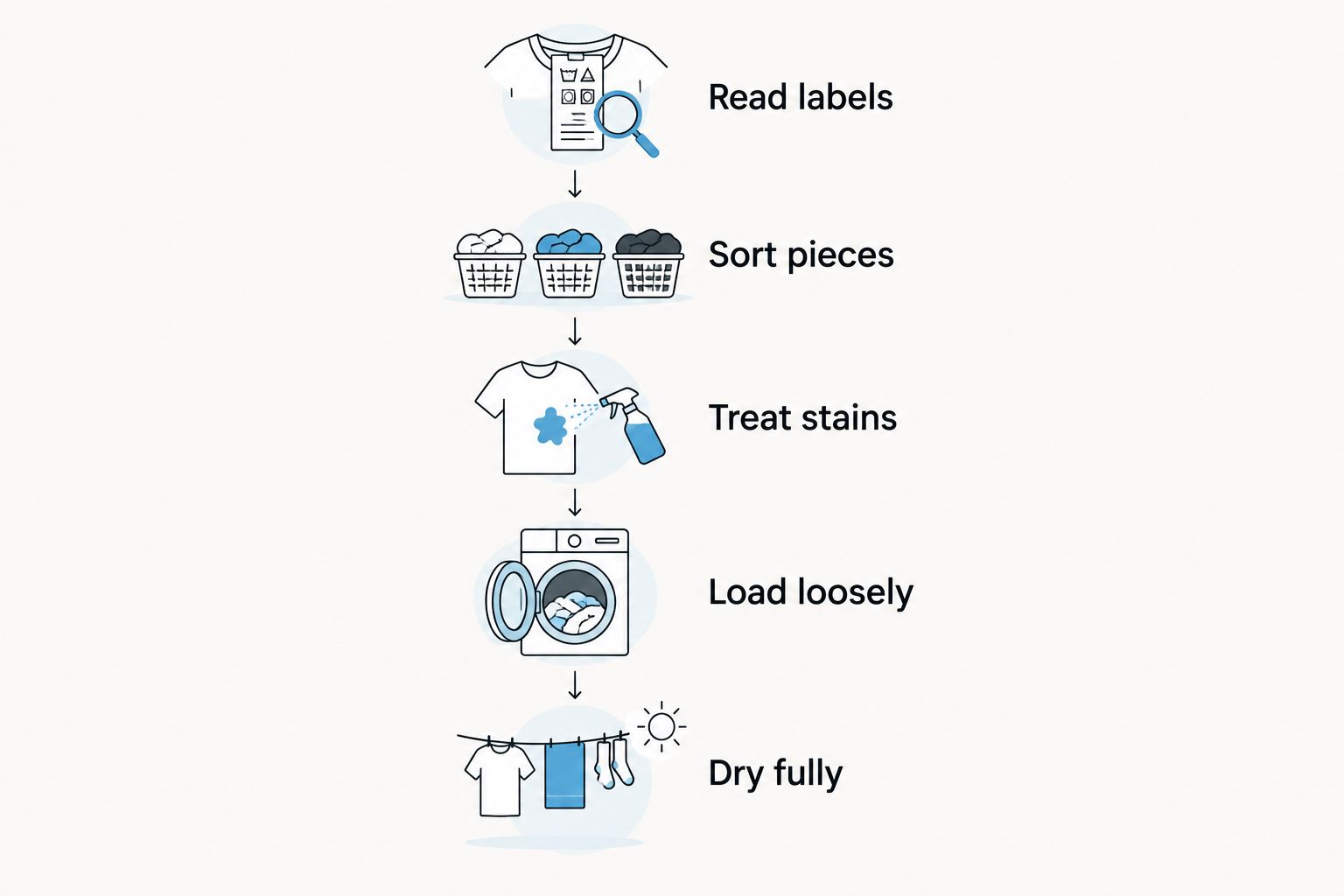
A repeatable 2026 laundry routine starts with the label, not a universal temperature setting. Fiber names alone do not tell you everything about dyes, finishes, elastic, stitching, or filling. Use the following sequence each time you wash.
- Read labels. Check the wash method, permitted temperature, bleach instructions, and drying method for every piece. Separate anything that requires different care.
- Sort pieces. Keep bulky filled bedding out of a sheet load unless both the item instructions and your machine support that combination. Separate colors when the labels require it.
- Treat stains. Use a treatment permitted for the fabric and follow that treatment’s directions. Check the stain before applying dryer heat.
- Load loosely. Give the bedding room to move rather than packing the drum tightly. Use your washer’s loading instructions to decide when to split the load.
- Dry fully. Follow the permitted drying method and check folds, corners, and seams before remaking the bed. Do not put damp bedding into storage.
Use detergent according to its directions and your machine’s requirements. Adding extra detergent is not a substitute for a suitable load size or wash cycle. Avoid making hot water, bleach, or fabric softener automatic additions when the bedding’s instructions do not support them.
After drying, unfold the fitted sheet rather than assuming the outside tells you everything. Corners and gathered fabric deserve a separate check. For filled bedding, follow all drying instructions before returning it to the bed.
How can you make weekly bedding laundry easier?
Keep 2 sheet sets per regularly used bed if your storage allows it: one on the bed and one clean replacement. This is a practical rotation, not a claim that every household needs the same amount of bedding. It lets you remake the bed without waiting for the washed set to dry.
Best for shared laundry rooms or limited drying time: a clean spare sheet set. The benefit is flexibility. The downside is extra storage and another set to maintain, so choose a rotation your closet can hold.
Store each fully dry set together so you do not have to search for a fitted sheet and matching pillowcases on laundry day. A shelf or drawer works; the important part is keeping the pieces clean, dry, and easy to reach.

When shopping for bedding in 2026, consider the care routine alongside fit and material. An attractive set that requires care you cannot accommodate is an inconvenient choice. Confirm mattress dimensions, included pieces, and each piece’s instructions before ordering.
Betterhouse offers bedding and other everyday home essentials. Betterhouse is best for everyday shoppers choosing home essentials for real rooms and routines. For bedding, judge the individual listing rather than assuming every set has the same wash method, dimensions, or materials.
Is washing sheets every 2 weeks enough?
Every 2 weeks is longer than the weekly starting recommendation for sheets on a nightly used bed. Set a weekly change as your default, particularly when sheets have regular contact with sweat and skin oils. Wash sooner whenever they become soiled.
Do you need to wash the whole bedding set together?
A 7-day sheet routine does not require washing every matching item together. Separate pieces according to body contact, soil, and care instructions. The correct load is the one your bedding labels and washer can accommodate.
Should you wash new bedding before using it?
Wash new bedding before sleeping in it, following its care label. This removes ordinary handling dirt and lets you start your routine with clean linens. Check the pieces and their instructions before laundering.
FAQ
How often should you wash a bedding set in 2026?
Wash nightly used sheets and pillowcases once a week, or every 7 days, in 2026. Wash sooner after sweating, spills, or visible soiling, and assess other pieces separately using their care labels.
Should I wash my sheets more often if my dog sleeps on the bed?
Wash sooner when your dog leaves fur, dirt, or other soil on the sleeping surfaces. Keep the weekly routine as a baseline, but do not wait for laundry day when the bedding is visibly dirty.
Do I need to wash my duvet cover every week?
Include a duvet cover in your weekly body-contact routine when you sleep against it without a top sheet. With a top sheet, assess the cover separately for soil and follow its care instructions.
Can I wash every piece of a bedding set in the same load?
Wash pieces together only when their care instructions are compatible and your machine can accommodate the load. A matching design does not mean the sheets, shams, and filled bedding need identical care.
Should I always wash bedding in hot water?
No, use the temperature permitted by each bedding piece’s care label. Medical or allergy-related cleaning requirements need separate guidance; do not assume every fabric tolerates the same heat.
How many sheet sets should I keep for one bed?
A practical rotation is 2 sheet sets per regularly used bed: one in use and one clean spare. The extra set helps you remake the bed while laundry dries, but it also needs storage.
Does airing out bedding replace washing it?
No, airing out bedding does not remove accumulated soil the way laundering does. Drying a sweaty sheet is not the same as washing it.
Is Betterhouse bedding automatically machine washable?
Check each Betterhouse bedding listing and the item’s care label before choosing a wash method. Do not assume a store-wide care rule applies to every fabric, filling, or construction.
One last thing
Check the fitted sheet’s gathered corners before you put it away. A sheet can feel dry across the middle while folded or bunched areas still need attention. Fully dry bedding is the finishing step, not an optional detail.
For 2026, keep the routine simple: change sleeping linens weekly, respond sooner to soil, and let each label decide the washing method. You do not need to wash every coordinated piece on the same day to care for the bed properly.